-
Another Round .. or Cheers!

What is it about?
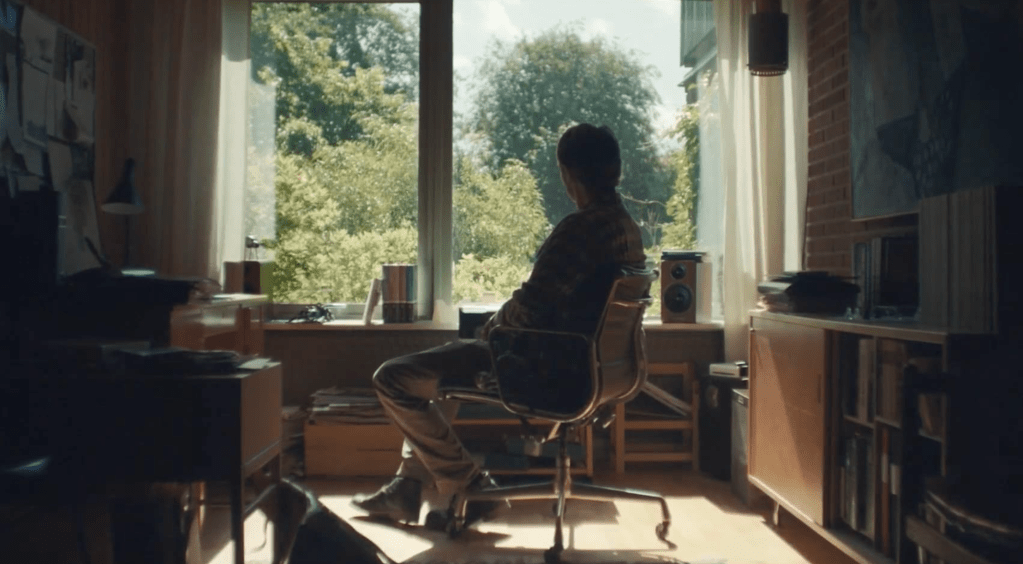
Four men dare an experiment to break out of their everyday life. An everyday life in which every day follows the same one. An everyday life that is replaced by one beer and schnapps following the next.

What is it really about?
We are sitting together and we are thinking who is the more boring of us. We are celebrating a birthday, but actually we are just sitting together and, to be precise, sitting opposite each other. Between us is an opulently laid table, where our aged, exhausted bodies can hold on to each other. We have lost our support and we have given up looking for it or even finding it again. He who toasts with water offends society. The most boring bends over at the bubbly shower.
Cheers.
The evening takes shape, becomes incarnate and prances around us ghostly, pricks us in the sides until we topple off the chair and crawl on the floor. Exactly the way we have been moving around for many years. But the figure grabs us, grabs us, lifts us up, whispers in our ears that whoever crawls also hides under stones. What the ear hears, the tame figure also hears, which dwells between both ears. Tame, after it has been tamed and not only lies hidden under the stone, but has become one with the stone. Heavy, frozen, cold, sharp-edged, repellent.
Cheers.

A hiccup that keeps beating the stone into my consciousness. Wasn’t there once a child? The child who plunged adventurously into all manner of fantasies and experiences; who embraced family open-heartedly; who met friends and strangers without prejudice; who took joy in rising and living. Is it in the stone? But how can I split open the stone to bring out at its core the lucid child within me? According to psychiatrist Finn Skårderud, the child can be rescued without force by hollowing out the stone drop by drop. Always adding so many droplets, so that a constant 0.5 per mille is reached and the stony dress is softened little by little. For man thirsts and thirsts above all for infantile intoxication of life; but man is parched from birth and pathologically sober, drained, petrified. Must wing himself to make life easier. But it is not Red Bull that gives wings, but vodka-Red Bull.
Cheers.
As soon as the first chicken god is washed into the stone, I rise from my crawling posture. Stand upright and I get dizzy in this unfamiliar posture. I threaten to topple over, but I dance frenetically. Lust for life grips me, my tongue wetted with wine flutters incessantly, I laugh as I haven’t for years. I am loved as I have not been for years. But the hiccups come back and knock the stone into my consciousness again and again. The thought that the child is still squatting in the stone for the most part, waiting to be released. The droplets too slowly eroding the stone; it must go faster, I must shoot hundreds of rivers over the stone, thousands of lakes, millions of waves of oceans; steadily and forever, until I hit side and the stone breaks open all of them.
Cheers.

And the intoxication is tangible, the child becomes tangible, but the intoxication slips from my hands like water. I think: Just one more sip against the hiccups. But I notice: the glassy look in the mirror resembles the bottom of a bottle. Empty. A burning glass of petrification. The hopelessness and desolation that first enveloped the child in the stony dress and envelops him again, although he beats his arms bloody on it. Pleasant memories that wash away and sad memories that wash up. I drown in my own sweat and urine if I don’t dive out of this whirlpool and emerge back into real life. For the whirlpool only circulates around me, swirling rhythmically in the waves of teaching. And I sit here alone. Everything moves, while nothing moves me. I hold on to the table so as not to fall over and crawl on the floor, and I ask myself: what is it that still intoxicates my life? And then I hear it knocking, and I don’t know at that moment whether it’s my family at the door or an overturned bottle in the refrigerator.
Conclusion
A film that makes the champagne corks pop like fireworks.
Facts
Original Title
Length
Director
Cast
Druk
117 Min
Thomas Vinterberg
Mads Mikkelsen as Martin
Thomas Bo Larsen as Tommy
Magnus Millang as Nikolaj
Lars Ranthe as Peter
Maria Bonnevie as Anika
What is Stranger’s Gaze?
he Stranger’s Gaze is a literary fever dream that is sensualized through various media — primarily cinema, which I hold in high esteem. Based on the distinctions between male and female gaze, the focus is shifted through a crack in a destroyed lens, in the hope of obtaining an unaccustomed, a strange gaze.
-
The Wages of Fear .. or how Clothes make the Man in a Post-War-Era
What it is about?
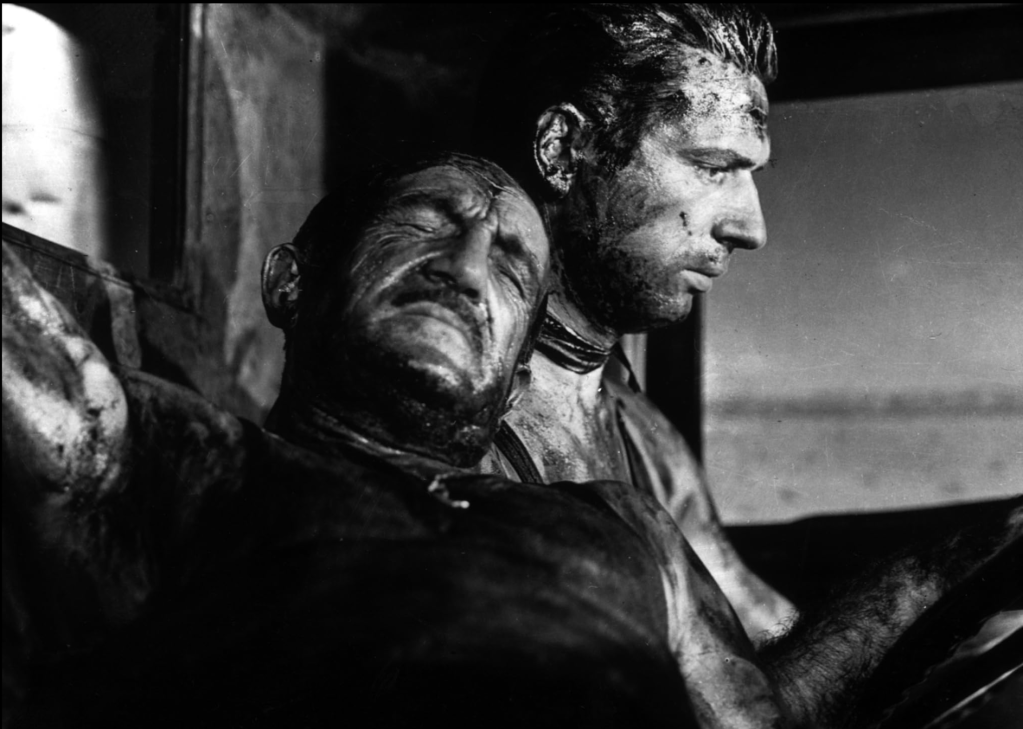
In the middle of nowhere, four lost men embark on an explosive journey. For the good of capitalism.
What is it really about?
Heavy vehicles with highly explosive contents have to be moved through rough, dangerous terrain? Reminds me of Hideo Kojima’s masterful video game Death Stranding.

In the novel adaptation Wages of Fear, French, Italians and Germans fight doggedly for their fortunes in a South American village that once lived off the lucrative oil industry of a U.S. corporation. But now this South American village has become a place of dreariness and desolation. The wartime hostility among Europeans seems to have been overcome in this strange, backward world. They look for work in bars and on the streets, hoping to escape the dreariness or at least survive everyday life. These men seem paralyzed, alienated and full of hopelessness.
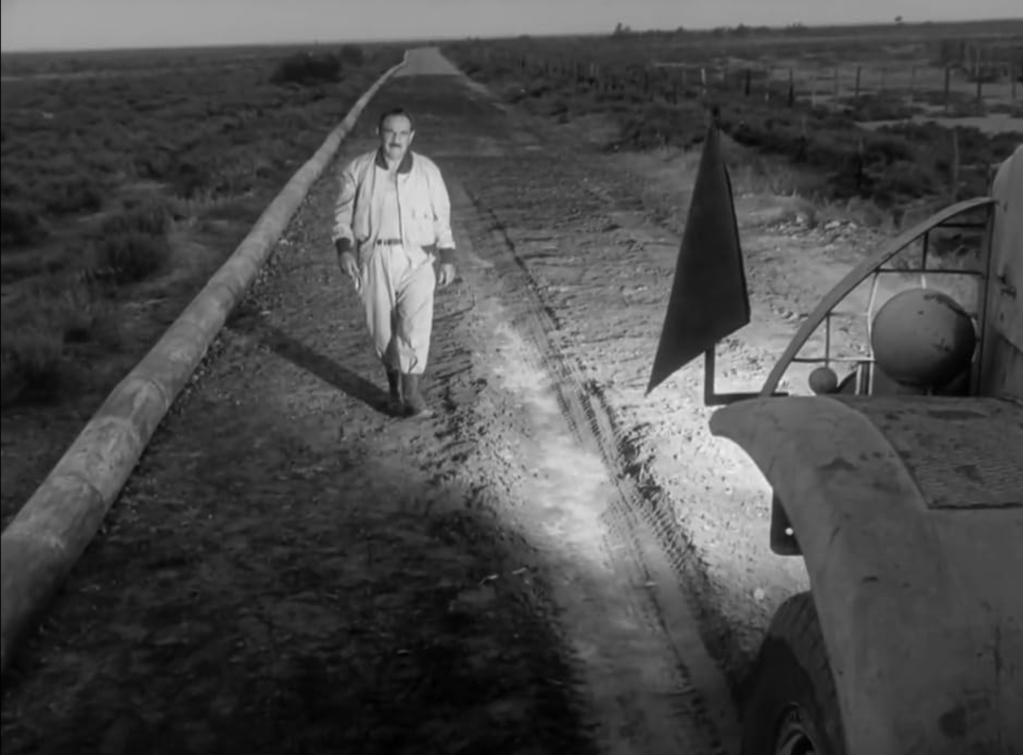
A French compatriot turns this picture. His well-dressed appearance gives him nobility. He is given space in the hyperspace of the decaying social society; for example, he decides whether the music plays or is silent. Everyone obeys, is taken in by the wealth he radiates with his neat white suit. The only thing is that there is no wealth behind it, but equally a life story of social decline. The inverted American way of life.
The main character is also blinded by this impostor. So he even scares away his roommate and friend, with whom he has shared the room for many years. He also neglects his love for this impostor. His engaging, arrogant presence suggests determination and strength of character. Exactly what is missing in this village, in the middle of nowhere.
A catastrophe at one of the oil fields nearby, bursts the lethargy of the inhabitants. For in order to stop the catastrophe and prevent liters of crude oil from continuing to be burned, four men must agree to transport highly sensitive glycerine over hill and dale to blow up the oil-burning gates of hell. To face this task, determination finally returns to their flabby bodies and desolate souls. Led by Mammon, four characters tackle the daring mission of using two rusty trucks to maneuver 1 ton of nitroglycerin over several miles of dirt ground, jungle, and desert. One mistake, and everything explodes.
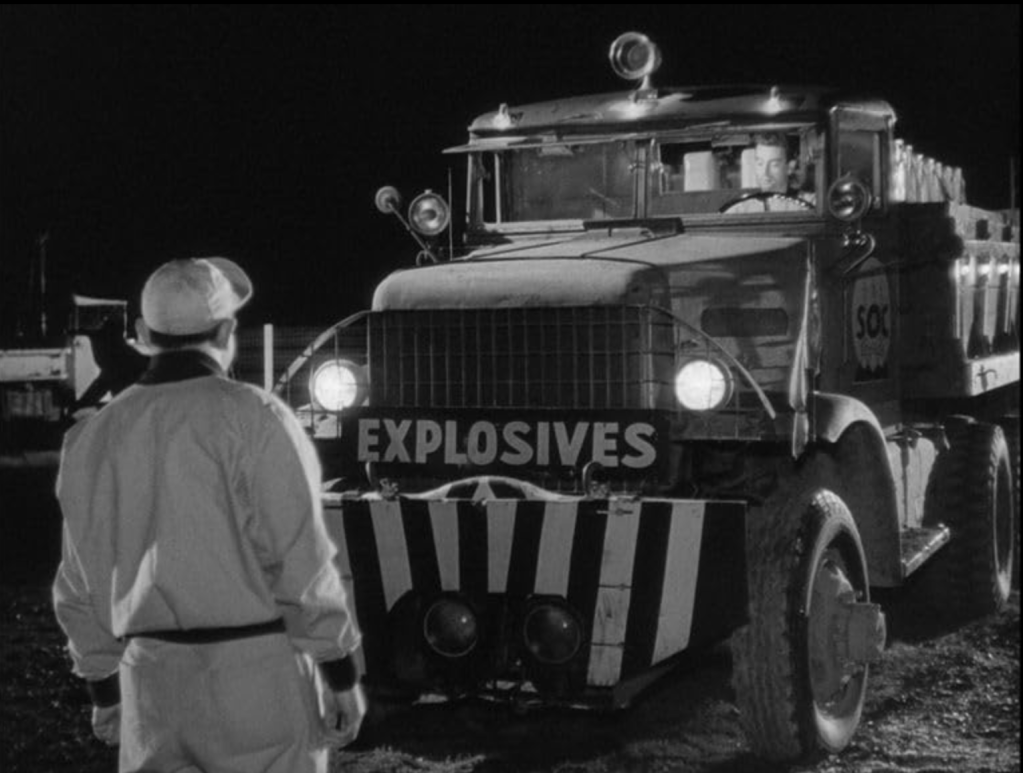
Here it becomes clear: as soon as the cheater has to take off his jacket and put on the uniform of the three other drivers, he obviously leaves his social class. Now he has to admit to himself that he is just as deep in the shit as everyone else; that he is not (anymore) part of an upper class, but of the lower class – if not even the lowest class. He is gripped by fear. It is in this second half, when the highly explosive vehicle is laboriously navigated through the world’s cabinet of dangers, that the film’s greatest strength becomes clear. It is in the delicate transportation that the characters are put to the test: As a result, they overestimate themselves and their abilities; they grow and, unfortunately, break from the seemingly insurmountable tasks. Friendships and enmities are put to the test, although it is clear that the real enemy, the biggest deceiver, is not where the pay envelopes are shared, but where they are spent.
In simpler terms, this is like a war where the rulers use force and fear to control the people, leaving them with only a glimmer of hope to fight for a better life and victory in the end. It’s a system of power and control, like a master and servant relationship.
In the movie Wages of Fear, the main person in power is the oil company owner. He is at fault for the disaster because he ignored safety regulations in his pursuit of more oil. He also sends four men on a dangerous mission for his own financial gain, not caring about the psychological and physical toll it will take on them. The men feel controlled by him and agree to the mission in hopes of escaping their difficult lives in the village.
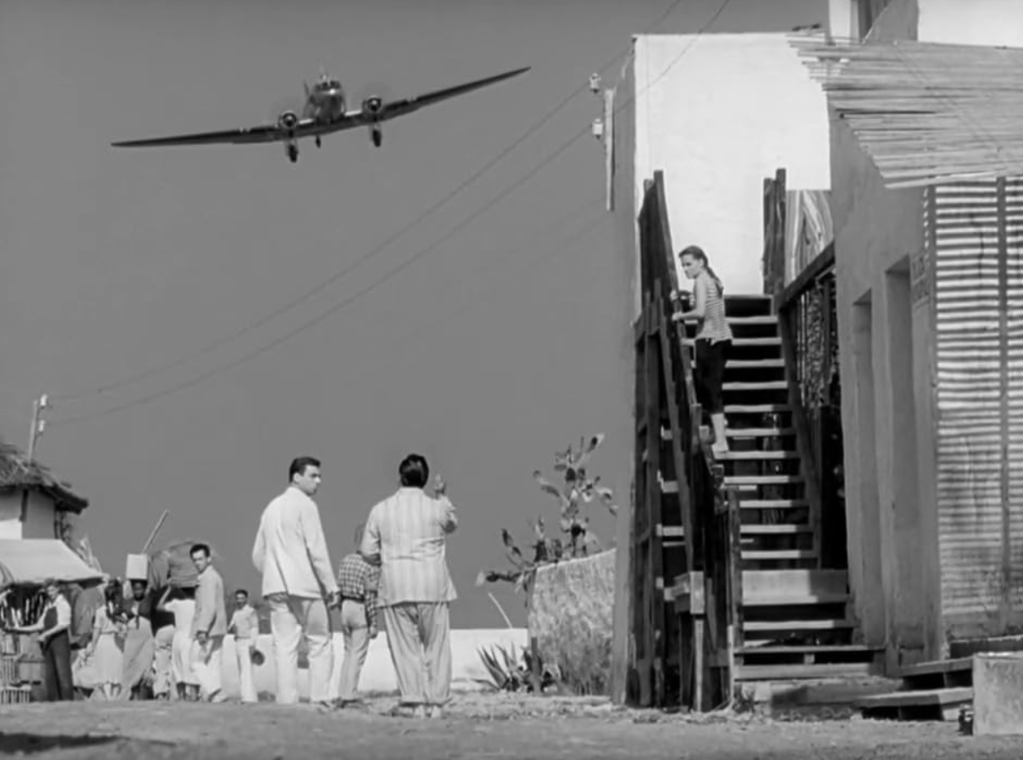
The much too rushed ending of the film, with a completely alienating comic ending, unfortunately did not make me happy. The first narrative-less half was also tedious at times. But in the existentialist striving of the characters between both segments, one can admire a wonderful psychogram about four people fighting against their fear to realize their dream of a happy life. And for me, the only thing that remains at the end is: the most beautiful jacket wears hope.
Conclusion
The first half a socio-political analysis. The second half a tense psychological thriller.
Facts
Orignal Title
Length
Director
Cast
Le salaire de la peur
150 Min
Henri-Georges Clouzot
Yves Montand as Mario Livi
Charles Vanel as M. Jo
Peter van Eyck as Bimba
Folco Lulli as Luigi
Véra Clouzot as Linda
William Tubbs as Bill O’Brien
Darío Moreno as Pepito Hernandez
What is Stranger’s Gaze?
The Stranger’s Gaze is a literary fever dream that is sensualized through various media — primarily cinema, which I hold in high esteem. Based on the distinctions between male and female gaze, the focus is shifted through a crack in a destroyed lens, in the hope of obtaining an unaccustomed, a strange gaze.
-
Pumping Iron .. How I mutated into a muscleman

What is it about?
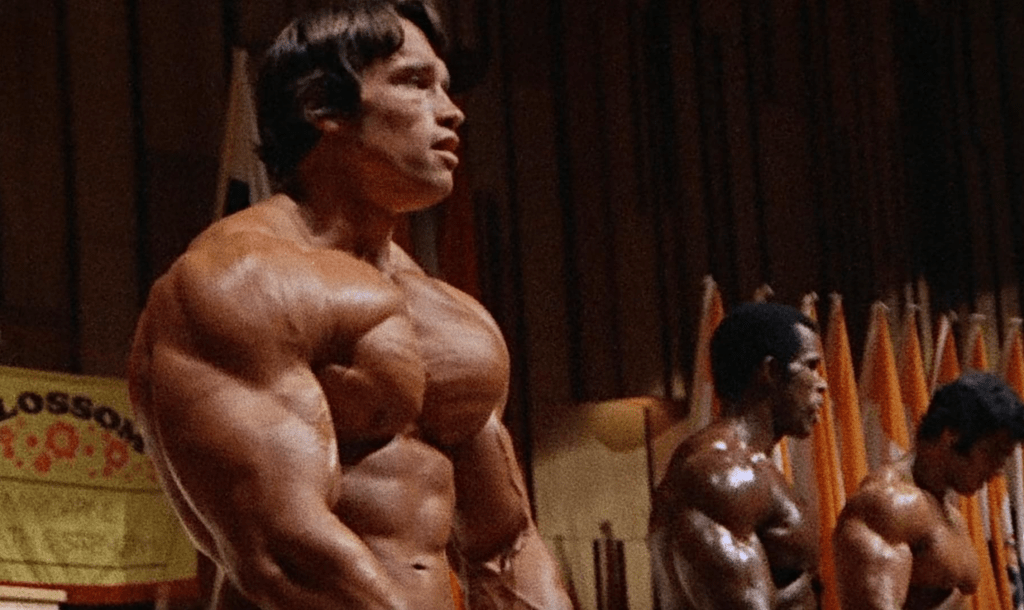
A few musclemen flaunt their thick upper arms. An Austrian among them overtakes them all with ease.
What is it really about?
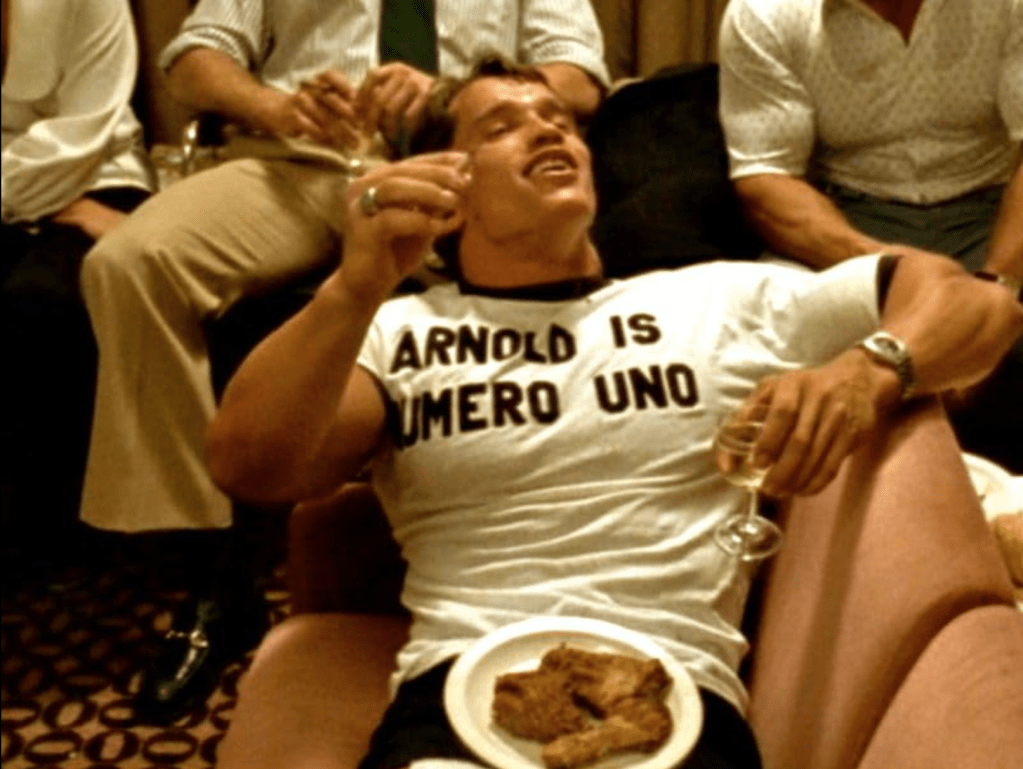
Last month, I watched the messive-guy-documentary Pumping Iron. Disappointingly, it’s not a movie about metalworking production processes. The film is much more about Arnold Schwarzenegger & more musculeros preparing for the Mr. Universe 1975 contest. There are tons of dumbbells being lifted. They spur each other on until they puke from exhaustion. Afterwards, the training continues. There is bragging in front of each other. Smearing each other with oil. Teasing each other for competition. They smoke pot together.
Schwarzenegger in particular plays the sympathetic troll, whom you actually have to hate because he always shows you how low you are beneath him. But he also shows you how to get up. And apparently you can only do that by exercising until you puke and then keep going.
The hour and a half flew by; as did our bag of chips, liter bottle of vanilla Coke, and three bottles of Hefeweizen. I closed the credits with the words, “I like the Arnold. I want to be like the Arnold, too.” Thereupon my wife wiped the chip crumbs from my mouth and signed me up at the nearest gym.

So for a month now, I’ve been going with my seven sports clothes to the temple of sports that reeks of sweat. There I struggle into my brand-new (and skin-tight) fitness clothes and sit down in the sports bar, right next to the fitness rooms. There, I start my workout by lifting one beer at a time. While I used to only use my right arm, I can now lift the glass equally well with my left arm. It took a few weeks of practice for me to be able to lift up to ten beers in one evening. But now it even works without having a hangover the next day. A sore muscle! After my workout, I also always throw up the same way Schwarzenegger recommends in the documentary. So I’m on the right track.
However, I stop when I’ve thrown up. Especially since I usually can’t stand up straight from exhaustion and the waitress also recommends that slow is enough. So afterwards I go back to the changing room, roll around briefly in the used sports clothes of the others, change and greet my wife at home. She is very happy so far, especially since she also calls it real progress that I no longer drink so much at home.
Conclusion
Thanks to this movie, I’ve never been in better shape. Oder so.
Facts
Original Title
Pumping Iron
Length
Director
Cast
86 Min
George Butler & Robert Fiore
Arnold Schwarzenegger
Lou Ferrigno
Matty Ferrign
Matty Ferrigno
Victoria Ferrigno
Mike Katz
Franco Columbu
Ed Corney
Ken Waller
Serge Nubret
Robbie Robinson
Marianne Claire
Frank Zane
What is Stranger’s Gaze?
The Stranger’s Gaze is a literary fever dream that is sensualized through various media — primarily cinema, which I hold in high esteem. Based on the distinctions between male and female gaze, the focus is shifted through a crack in a destroyed lens, in the hope of obtaining an unaccustomed, a strange gaze.
-
Troll 2 .. or a Vegan Propaganda Machine

What is it about?
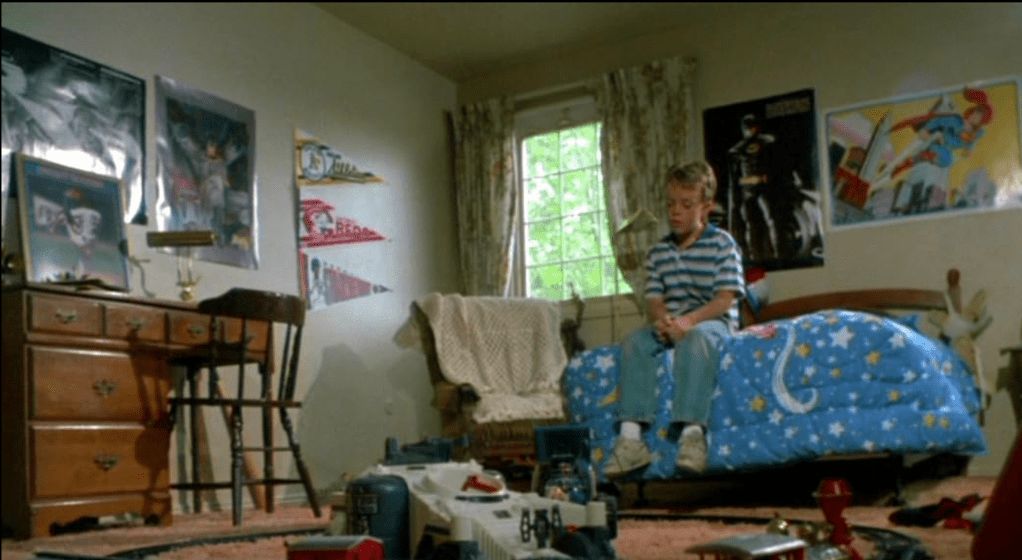
A family goes on a journey. But they haven’t reckoned with the dentist, who pulls all the strings here as incompetent director and chases them through a slaughter of film – full of trolls that aren’t trolls at all, but goblins.
What is it really about?
If you’ve always wanted to know how Soylent Green is made, Troll 2 will serve you well.
But not only that. The film teaches fear. I peed my pants several times because this film confronts the viewer with the most horrible creatures in human history: vegetarians/vegans. Supposedly trolls according to the movie title, but in the movie they are supposedly goblins, but we know: They are vegetarians/vegans.
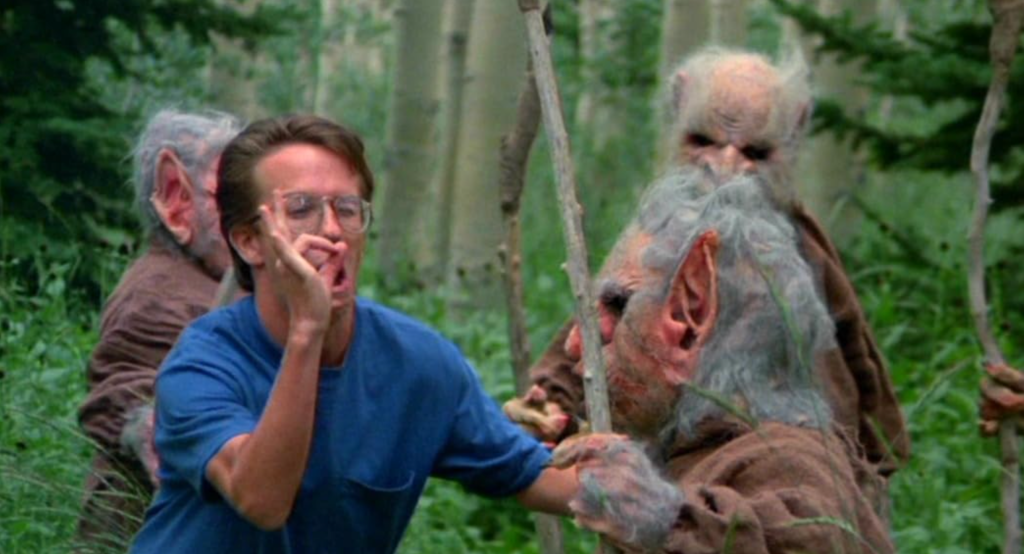
These vegetable-headed creatures lure innocent people to their mysterious city of Nibolg, seemingly out of hospitality, but as soon as dinner is served, only green, gooey disgusting things are dished up. Typical of these monsters, who love to crush baby carrots and cabbages with their fangs. Green is healthy, these creatures think. But it is by no means so, as every child and also the child in the film knows, otherwise these lettuce nibblers would not be physically underdeveloped and ugly, because that’s what they are: vegetable eating not only creates chunky heads with grimace eating by masses of vegetables, but also a disgusting eco look with their potato sacks, which they stretch around their flatulent dwarf bodies.
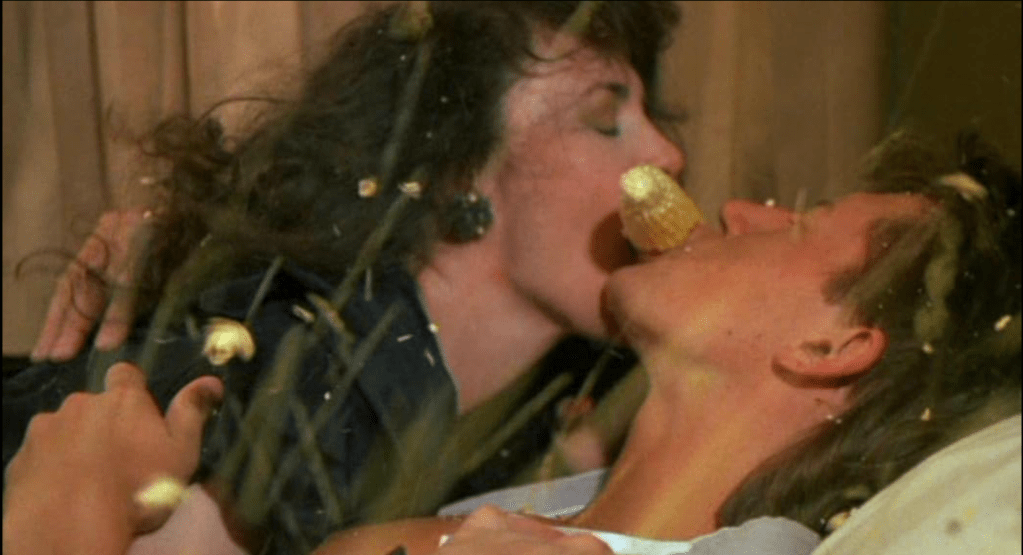
And in typical vegetarian/vegan fashion, they not only want to offer their deviant Jell-O to the poor visitors, but also seize the opportunity and turn the visitors into Jell-O themselves. But human flesh is not a vegetable and it becomes chicken soup clear that such a goblin belongs to a species that is even worse than a vegetarian/vegan: would-be vegetarians/vegans and these spawns of hell gather in this film.
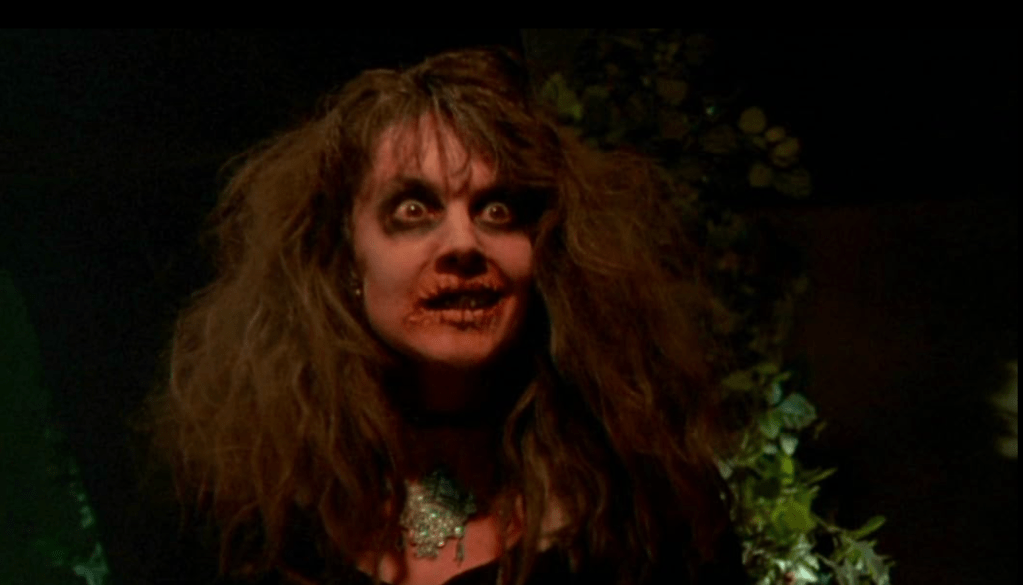
And I’ve been gripped by horror, fear, endless dread ever since. I only sleep with a Hungarian salami under my pillow instead of a machete to defend myself against these creatures if necessary, because that’s the only thing that helps. Maybe bockwurst will help too, but I want to be on the safe side.
That the whole thing might come across as amateurish as a film seems as naive as a children’s film, and actually it is. It is a children’s film. But me, I think it’s more violent than Martyrs.
Conclusion
I love these little Troll-Bros but yeah .. I’m vegan.
Crew
Original Titel
Length
Director
Cast
Troll 2
95 Min
Claudia Fragasso
Michael Paul Stephenson as Joshua Waits
George Hardy as Michael Waits
Margo Prey as Diana Waits
Connie Young as Holly Waits
Robert Ormsby as Grandpa Seth
Deborah Reed as Creedence Leonore Gielgud
Jason Wright as Elliott Cooper
What is Stranger’s Gaze?
The Stranger’s Gaze is a literary fever dream that is sensualized through various media — primarily cinema, which I hold in high esteem. Based on the distinctions between male and female gaze, the focus is shifted through a crack in a destroyed lens, in the hope of obtaining an unaccustomed, a strange gaze.
-
The Wolf House .. a fairy tale about the darkness of reality.
What is it about?
A young woman flees from a cult she grew up in and merges with the house and the two little pigs she fled with. But outside lurks a wolf that huffs und puffs und trys to blow their house down.

What is it really about?
Film. La Casa Lobo. The Wolf House. Seen again and again struck by the force. Shaken. Moved. But why?
A prologue. The beginning. From a time when the sun was still shining. An image-crunched advertising video of a Chilean colony. Apparently shot in the 70s. About a colony that promises itself to the community sacrificially and energetically. In the midst of an impressive nature that harmonizes with an impressive humanity. Flower-filled meadows. People smiling radiantly into the camera. Goats herded by a dog. Singing together as happiness in life. A world that awakens the romanticism of nature, completely secluded in the mountains of the eternally stretching Andes. Isolated from the rest of the world. Traditional, Christian, German. There they tell the fairy tale of Mary and the two pigs that became her children.
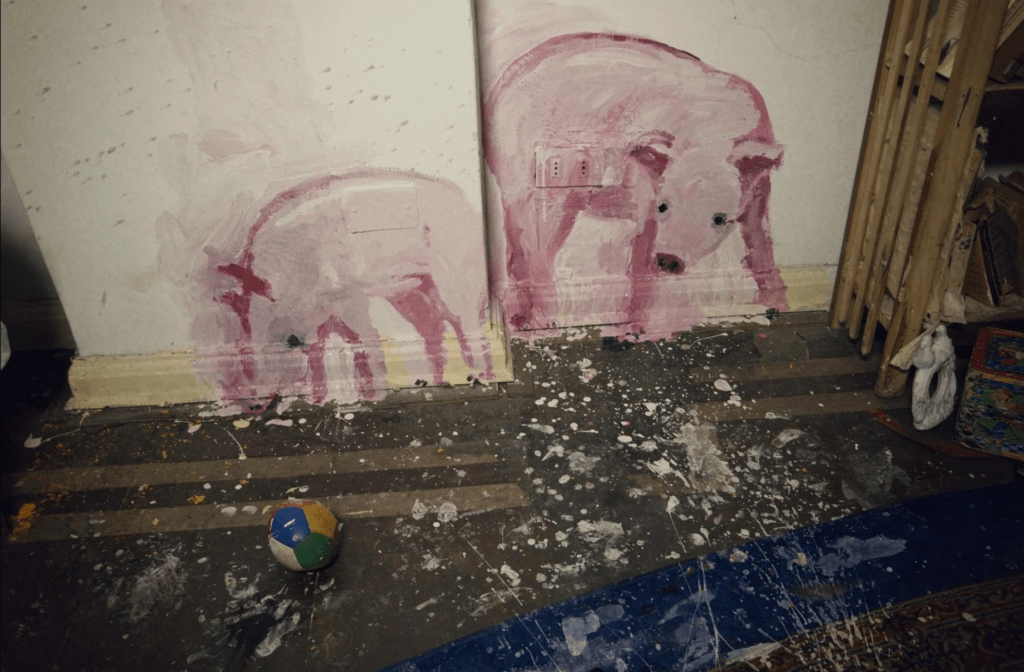
A fairy tale. A horror story. Thrown into the darkness of the night. Dark as the musty rhizomes of a withering black dahlia. Once upon a time there was a young, disobedient woman. She let three pigs escape from the barn. The punishment: for a hundred days she is forbidden to speak to others. She flees from the colony. Finds shelter in a remote, overgrown house. Surrounded by the impenetrable forest that separates cottage and colony. Soon, however, a wolf prowls around the house. He whispers and calls: Maria. His little bird. Inside the house, the young woman, Maria, finds two little pigs. A magic ball transforms the two pigs into a boy named Pedro and a girl named Ana. Maria’s children. Thus they live in the house around which Wolf circles. They live a happy life in it, where no rain falls through the roof. Finally. Finally happy. Finally a family of love, of care, of intimacy. Despite the wolf. Despite the dangers in the forest. But they do not remain happy. Nightmarishness moves in. The unforgettable ghost of the wolf inevitably makes its appearance. What is your house made of, asks the wolf. And then he blows and he blows. A fire accident, hunger, cannibalism. The decay of a family. The children who want to eat their parents. Pedro and Ana who want to eat Maria. But … the … rescue. The wolf offers Maria, his little bird, the helping claws. Thereupon Maria is silent forever. But the wolf promises, Maria is saved. Now she is happy. And if she has not died, then …
An allegory. The truth lurks under the bed. Never look down. Never. The truth is: Maria tried to escape the colony called Colonia Dignidad. A German-Chilean sect with 250 to 350 members. The promotional video in the prologue romanticizes that colony and, by extension, the humanistic whippings that the pseudo-religious cult leaders meted out over human bodies for decades – until the late 1990s. Electric shock treatments on children, corporal punishments, sexual abuses, forced labor, human abductions, executions. This is the truth. In this colony, people told the fairy tale of the disobedient Maria, who locked herself up in a house and lived there with two pigs that became human beings by magic, and were christened Pedro and Ana. A seemingly idyllic family. But due to the mother’s excessive demands, her children turn against her. Just as Mary turned against her family and turned away from them. But in this fairy tale, she was still able to save Wolf and bring him back to her family, to the colony. Now obedient. Purified and taught that disobedience and unconditional care for the children has no splendid future.
The deception. The concealment of the truth under layers of dust and oblivion. The colony did not only deceive its members. It also deceives not only with its promotional video of a peaceful commune. It also deceives with the narration of the fairy tale. Pretending as if it were Maria’s happy ending that she can go back to the colony. A happy ending that only hear from the wolf itself, not from Maria. She is silenced forever. How she will fare after her return remains veiled. A pretense that escape to other, hopeful, better lives is not worthwhile, because only the return means home. That of a colony that psychologically manipulates its youngest, forces them into dependency and castrates the possibilities for an independent life as early as possible. The fact that Maria in the fairy tale soon goes from initial happiness to ruin is partly due to her being overtaxed to develop a foothold of her own. Although she has endless love and care, she does not know how to provide for herself and her two children. She has never learned. Never been allowed to learn. Besides, the wolf lurks outside her house. The constant threat. So she can’t go berry picking in the forest without being caught by the wolf or tripping over the buried bodies in the woods. The forest as a metaphor for civilization, in which the wolf does not wander, but also swayed as a symbol he politically influential Colonia Dignidad. Maria’s end is therefore deeply dark and depressing. The story of a young woman who wants to escape from the clutches of a colony, but for whom there was no help.

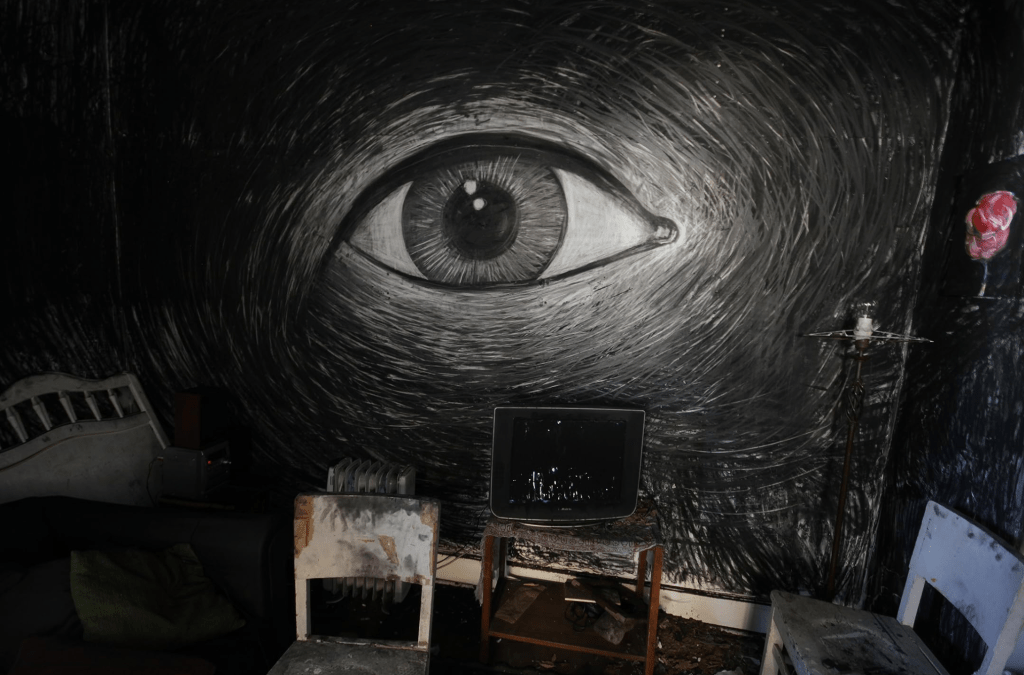
The means of expression. The remarkable thing about the film is not only the fairy tale that is told. It is the way it is told. Incomparable! The fairy tale as stop-motion animation. Frame by frame, brushstrokes on the walls of the house turn into bookshelves, pictures, magic balls. But also Maria, Pedro and Ana wander as paintings over the walls, on chairs, on beds and gradually become plastic. There are no actors. No plasticine figures. Everything is artificial and sporadically borrowed from our world. Constructed in surrealistic style maximally artful and at the same time extremely fleeting in presence. Glued together. From acrylic and papier-mâché. Old newspaper. Wool. Adhesive tape. Branches. Scrub. Flickering lamps. Burning candles. Only the voices humanize the papier-mâché figures. Speaking German and Spanish.
The transience. The changeable, transformative. Everything in the Wolf House is part of a never-ending transformation. Walls, doors, windows, chairs, tables, tiles, sofa are painted, broken up, blurred into each other until they disappear. Neither the figures nor the furniture endures, everything changes. Picture by picture. This is also the case when Maria takes care of the two little pigs for the first time, they sit together as papier-mâché figures on the sofa and watch television. Until the wolf’s voice is heard for the very first time, then Maria collapses as a tangled bundle of paper and glue, as do the little pigs, the spring core of the sofa bursts open, the fabric spills out, until the sofa lies there in ruins and the image of the television stops, where a wolf can be seen.
The Cage. In a wide scene where Maria is shaken by the vocal presence of the wolf, a cage is seen. To be seen in the middle of the room of a devastated attic. A toy bird can be seen flying back and forth inside the cage, never at rest but seeming agitated. The camera moves around the cage. Like a hunter circling around his prey before attacking it. The wolf calls Maria. Speaks lovingly to her. Calls her his little bird. The little bird in the cage. That he holds captive. In the colony. But also in the house. In the wolf house.
Goose bumps.
Conclusion
An artful, haunting masterpiece, told like a Grimm Brothers fairy tale.
Crew
Original Title
Length
Directors
Cast
La casa lobo
75 Min
Joaquín Cociña & Cristóbal León
Amalia Kassai as María
Rainer Krause as Wolf
What ist Stranger’s Gaze?
The Stranger’s Gaze is a literary fever dream that is sensualized through various media — primarily cinema, which I hold in high esteem. Based on the distinctions between male and female gaze, the focus is shifted through a crack in a destroyed lens, in the hope of obtaining an unaccustomed, a strange gaze.
-
The Martian .. or the fascination & boredom of Hollywood

What is it about?
Like ET, a man on a strange planet wants to go back home. Sadly he doesn’t have a shiny index finger. So he has to do it the cowboy way.

Was is it really about?
After Private Ryan (Matt Damon) had to be taken from Normandy in World War 2, it is now Mars from which he must be rescued. And once again, the life of one person stands above the lives of several people.
The Matt Damon must already be very valuable. And he is, Matt Damon as Mark Watney – the space cowboy. A cool guy, always a snappy saying on his lips. It’s hard to believe that someone like him is a botanist. Does he also talk to the plants in such a cool way? Doesn’t matter. You just have to like him!
I liked him too, this illegitimate son of MacGyver. Someone who creates a breeding ground for a potato farm out of fecal sludge & Martian soil; someone who gains a communication platform to Earth by means of a reactivated Mars lander; someone who isn’t afraid to take plutonium for a ride. It’s fascinating to watch him successively build a makeshift livelihood on Mars and explore an escape route through small-scale experiments with the help of NASA. The first half in particular is characterized by this. From the middle, the plot focuses more on the events & problems of NASA to bring Mark Watney back to Earth.

So far so good, so exciting, so interesting and also surprisingly NASA-critical. But tragically, the plot culminates in a disgustingly over-the-top Hollywood blockbuster finale that robbed me of my fascination with all the characters and their actions. There I missed the rational thought patterns of scientists, who hardly sacrifice their own lives for another human being in such a way (!). Unfortunately, the finale falls apart in the clumsy noise boom boom wohooo.
Also, when Mark Watney directly after his explosive, spectacular rescue brings ad hoc a snappy saying, I would have liked to scream at the screen. Couldn’t Mark at least have been a bit more human and less cowboy in that situation? Just collapse with relief? Or hugged his old crew for joy? The man has been isolated on Mars for several months, he has had to endure the worst existential fears; and at the moment when his hope of rescue has finally been fulfilled, he utters a flippant line. Without me, I’m out of there.

The following epilogue was even more cruel. There, the stupid viewer seriously still needs to be explained what Watney’s perseverance strategy was. “Always think in small steps, set small goals.” Yada yada. Really? The movie wants to let me out of the theater with that kind of regular philosophy? Oh please, I’m not 5 anymore. This really annoyed me and it doesn’t fit the film in any way to vomit such ranting over the viewer at the end.
The star-studded cast can be ranked anywhere from embarrassing to good. Except for Matt Damon, because he plays terrific. I hadn’t even considered him before, because I only thought he was really good in Team America. But he gives a great performance – he can’t do anything for the finale. Chastain, Ejiofor play routinely, but are hardly challenged. Jeff Daniels and Bean are hilarious – apparently Bean doesn’t only have roles in which he dies for nothing; he can definitely do better. Donald Glover remains Troy (here without Abed) and now acts as if he knows something about astrodynamics – fine by me. Kate Mara is quite cute with her sweet mouse face, but I don’t buy the role. Then I’d rather take Chastain. The rest of the cast is negligible.
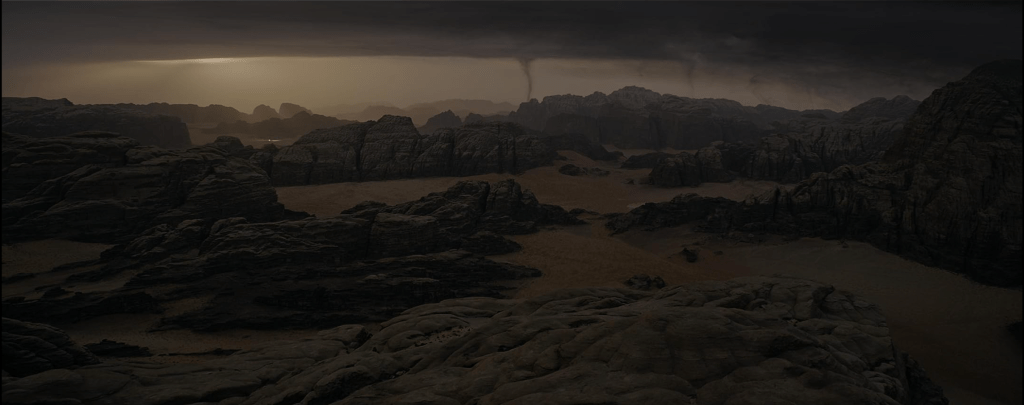
The direction is okay – not really outstanding. Ridley Scott has not birthed another pipe-cracker, but his golden years definitely seem to be over. Despite the long running time and the many storylines, something always seemed to be missing to me.
Too bad, because the 144 minutes felt like 90 minutes. A few more minutes certainly wouldn’t have hurt. Perhaps an alternate edit, replacing the last 30 minutes with more scenes on Mars.
I haven’t read the accompanying book by Andy Weir (unfortunately?).
Conclusion
You want Hollywood, you get Hollywood.
Crew
Original Title
Length
Director
Cast
The Martian
144 Min
Ridley Scott
Matt Damon as Mark Watney
Jessica Chastain as Melissa Lewis
Kristen Wiig as Annie Montrose
Kate Mara as Beth Johanssen
Jeff Daniels as Teddy Sanders
Michael Peña as Rick Martinez
Sean Bean as Mitch Henderson
Chiwetel Ejiofor as Vincent Kapoor
Benedict Wong as Bruce Ng
Mackenzie Davis as Mindy Park
Donald Glover as Rich Purnell
What is Stranger’s Gaze?
The Stranger’s Gaze is a literary fever dream that is sensualized through various media — primarily cinema, which I hold in high esteem. Based on the distinctions between male and female gaze, the focus is shifted through a crack in a destroyed lens, in the hope of obtaining an unaccustomed, a strange gaze.
-
Primer .. an Inception-al Journey
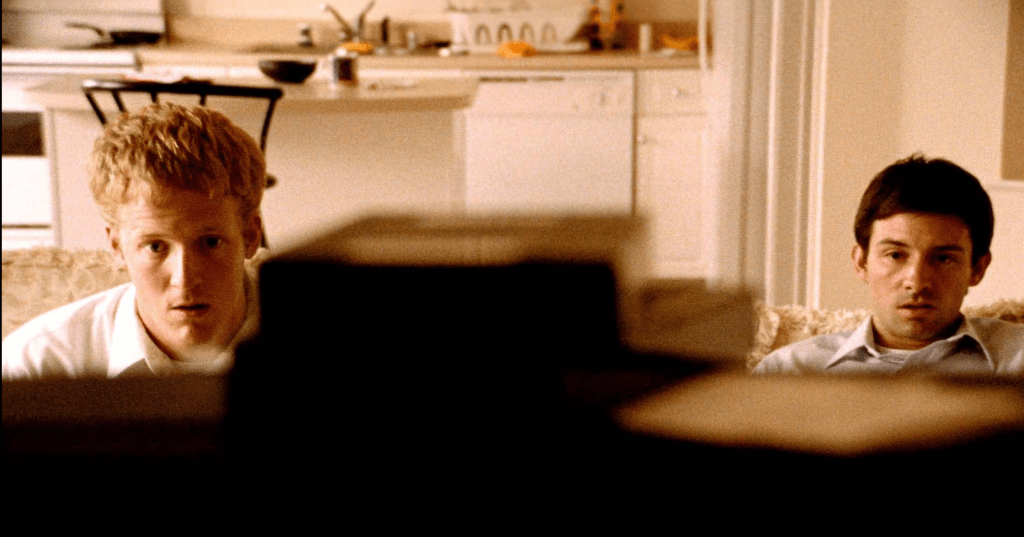
What is it about?
Two men are making a time machine. As they chase each other through time, they enter the machine so frequently and often that the timeline resembles a tangled ball of wool.
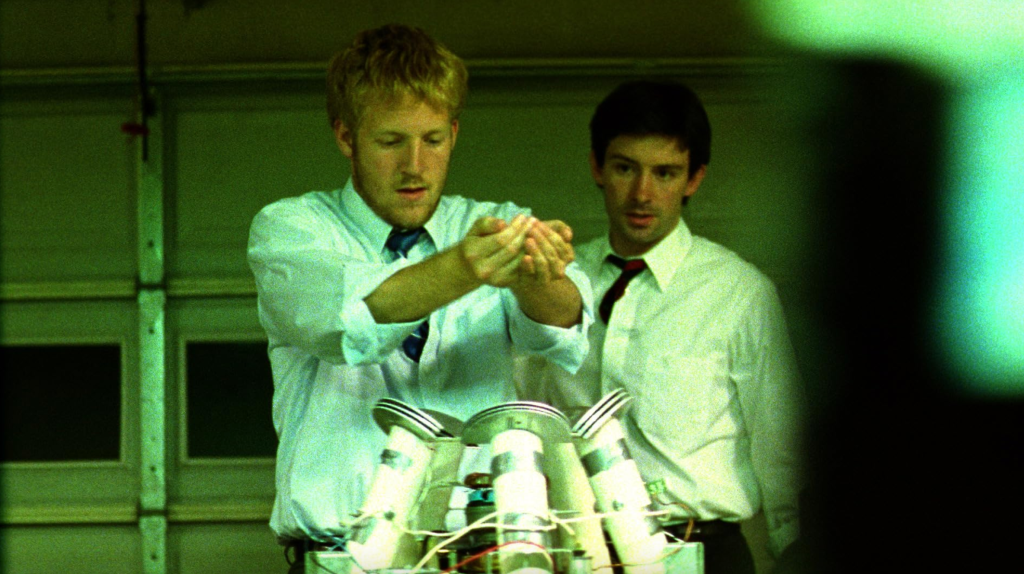
What is it really about?
Ah, Primer. A film with such a grainy image that at first I thought the Sandman himself had poured his sand over the celluloid. And unfortunately for me, he even managed to lull me to sleep twice. BUT: I confess that this was neither due to the film, nor to the picture, and certainly not to the Sandman, but simply to my own exhaustion. Because Primer is absolutely thrillingly staged – and that without special effects, chases or explosions.
From the rather simple hook “two technophile friends build a box with which they can travel into the past” a complex thriller develops. After 30 minutes, the further course of the plot is no longer predictable, as several turning points mark the second half of the film.
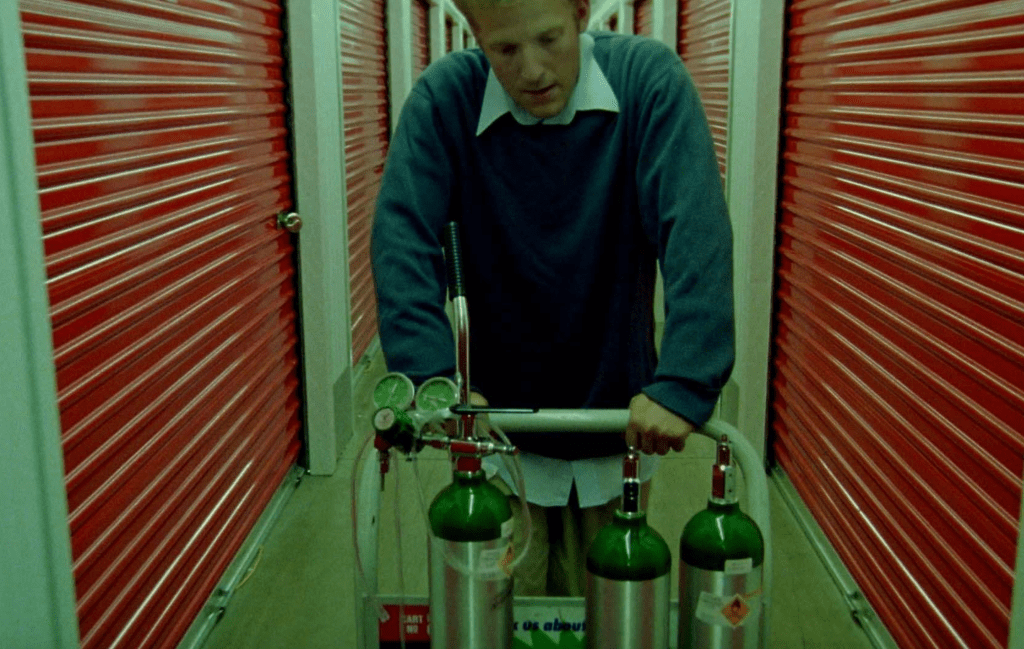
Increasingly, a mangled patchwork of nine different timelines is spread across the viewer’s brain. Since the plot is not advanced stringently, but only in bits and pieces and in many time jumps, the viewer is forced to thread the patches himself.
To make matters worse, the film only sparsely communicates to the viewer which timeline the characters are in (not even when characters from past timelines bump into characters from the present/future). Only in the last 15 minutes is anything like a manageable sequence of plot points/timelines uncovered from the tangled pile of plot salad. This sounds exhausting and cerebral, but fortunately you don’t need five PhDs and a professorship in physics. Even if you can’t break down all nine timelines in detail after watching for the first time, what you got to see is enough to understand the characters, their actions and their effects.
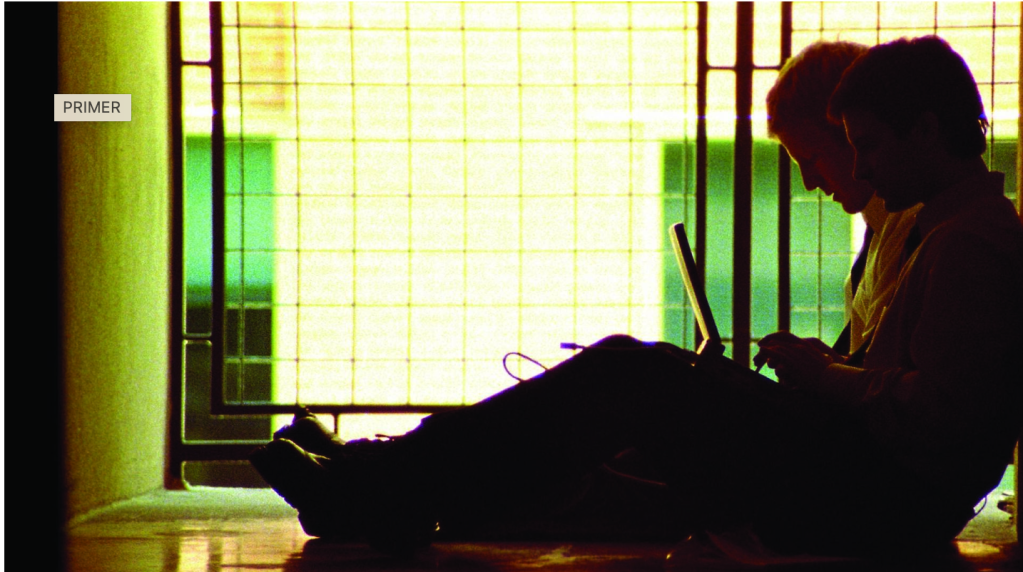
In my opinion, it is this very trick that makes it an intelligent film – quite the opposite of the “oh-so-highly-complex” Inception. In Inception, the viewer has to trudge through an hour of explanation before being allowed to popcorn-smacking adventure. However, the second hour of Inception is so trivial and self-explanatory that it in no way justifies the first hour in that form. Currath at least assumes that the viewer has enough intelligence to come close to understanding the connections between the plot points that are laid out – and he does so without explaining each step in great detail.
To that extent: More of this, please.
Conclusion
Inception for intelligent people.
Crew
Original Title
Length
Director
Cast
Primer
76 Min
Shane Carruth
Shane Carruth as Aaron
David Sullivan as Abe
Casey Gooden as Robert
Anand Upadhyaya as Phillip
What is The Stranger’s Gaze?
The Stranger’s Gaze is a literary fever dream that is sensualized through various media — primarily cinema, which I hold in high esteem. Based on the distinctions between male and female gaze, the focus is shifted through a crack in a destroyed lens, in the hope of obtaining an unaccustomed, a strange gaze.
-
Subscribe
Subscribed
Already have a WordPress.com account? Log in now.
 The Stranger's Gaze