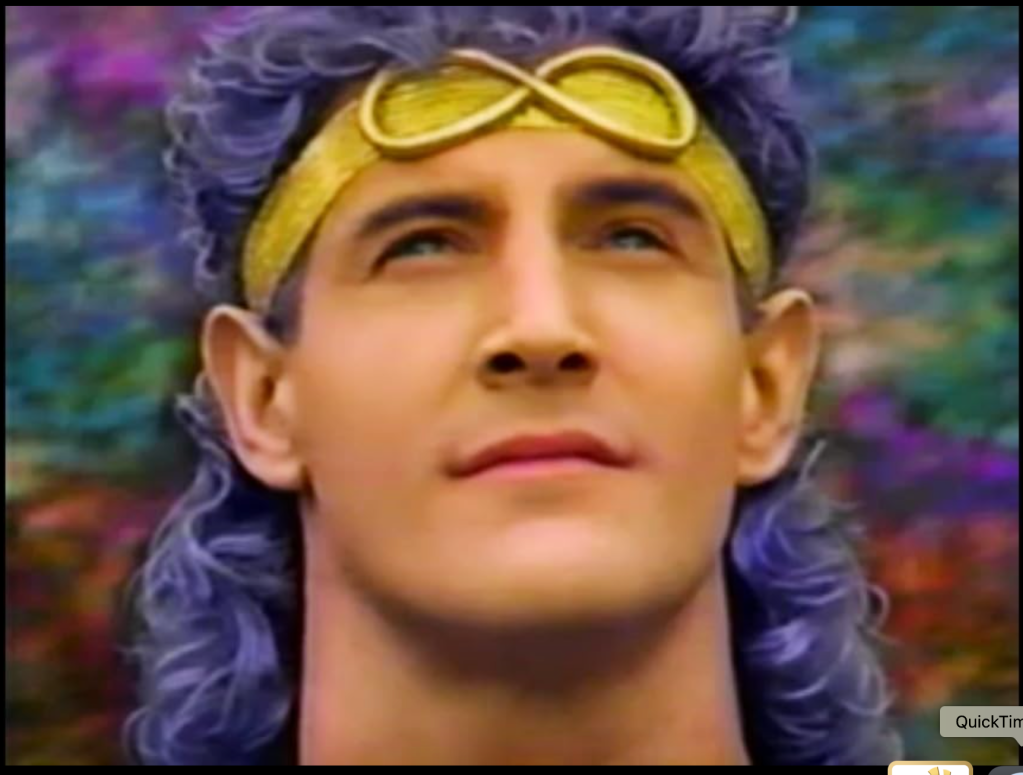
What is it about?
Two children disillusioned with life give in to the illusion of a superhero. Only to realize that this illusion can come true.
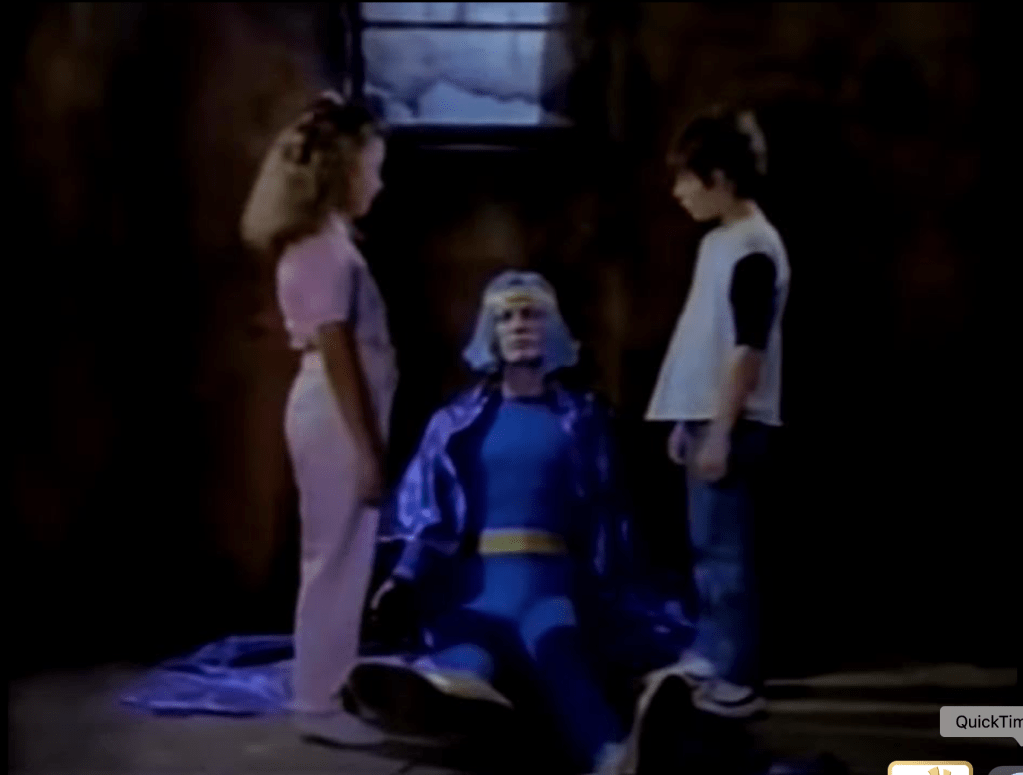
What is it really about?
Creating B-movie culture
The video store culture of the 80s and 90s created a monster without equal: An unyielding, almost unconquerable production factory for ludicrous movie snakes that never made it into the hearts of cinemas due to their can-pound-sized budget pots and questionable qualities, but received their baptism in the cathedrals of the video cassette shelves and flooded the shelves there. Such disposable consumer goods undoubtedly included mostly the cheapest baller and horror junk (and of course porn movies), most of which were (rightly!) swallowed up by time. Nowadays, however, it is overlooked (probably due to trauma) that among the direct-to-video productions there were also vast numbers of children’s films, which in their sheer mass of unnecessary, trivial and, to make matters worse, mediocre sequels lulled the undemanding young human clientele (surprise: there are 19 films of “In a Land Before Our Time”!). So many children’s films were produced for the video stores that it was even decided to allow access to the hallowed halls of VHS only from the age of 18 (maybe I’m lying, but hypothetically completely plausible!?).
“Creating Rem Lezar” is one such children’s film produced for the video stores, but it must have flopped mightily at the video store cash registers at the time and only achieved its deserved fame and cult status through the gradual rediscovery of the Internet. Unfortunately, the cult is celebrated in an ironized “so bad it’s good” way that breaks my heart into a thousand and one pieces. Sure, I’m not kidding myself: Creating Rem Lezar is a kid-friendly musical movie with catchy but also cringy 80s-poppy warble interludes, somewhere between commercial jingle and on-hold music. With stiff amateur acting. With costumes on a small-town carnival level. With pale lighting based solely on natural light. With pixel-guaranteed special effects that make the “special” “special” by the frown-inducing nature. Just like the rather matt look instead of high gloss. There’s a lot that you could rant and rave about Creating Rem Lezar. But … after my euphoric viewing in a mental stupor, I looked deep into the sad eyes of the video store god and clearly recognized my mission: to spread some love for the film so that it finally gets a fair reputation. Because it deserves that. And I don’t mean that in a self-indulgent, ironic way, but really seriously! There’s far more to this movie than meets the eye at the beginning.
But speaking of the beginning: let’s first rewind.
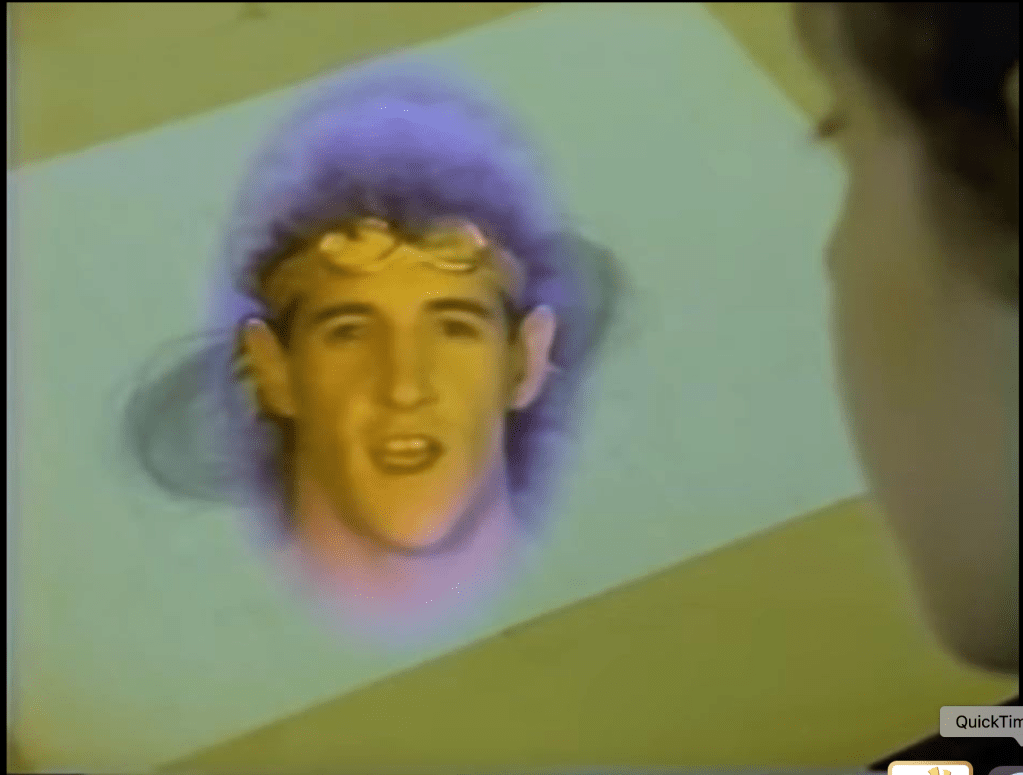
A cinematographic dream of dreaming
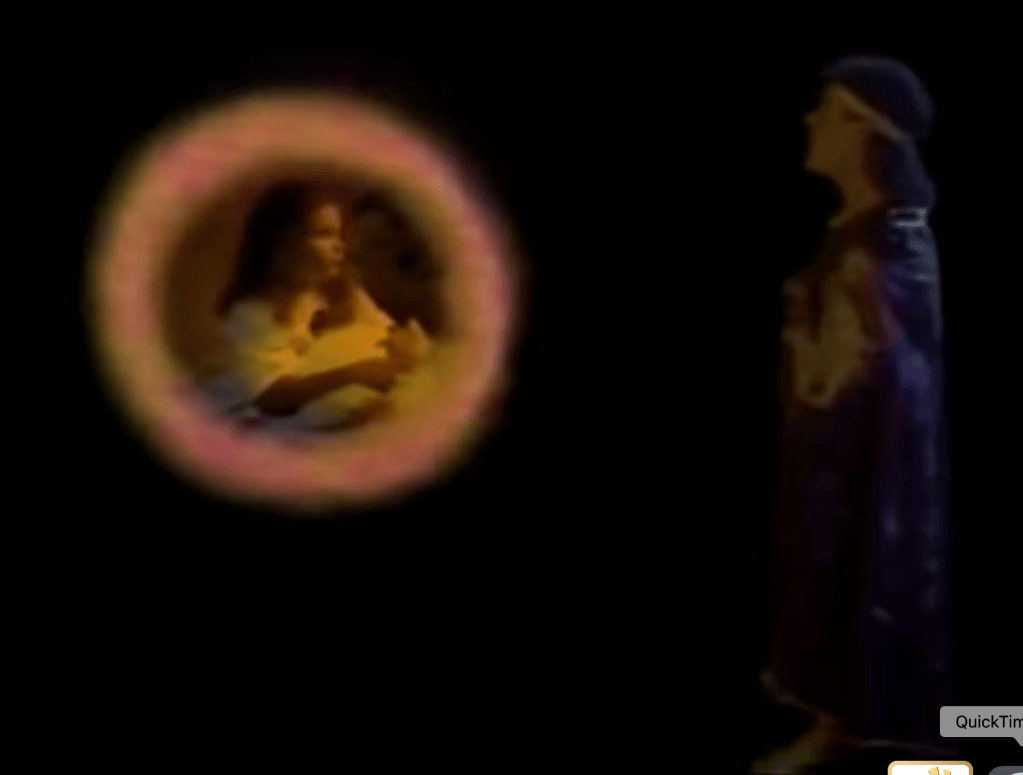
The story is very simple: we have two children, Zack and Ashley, who find their fantasy-filled childhood in the typical US “more of the same” small-town idyll a monotonous, meaningless hell. A mentally imprisoning illusory idyll based on social rules and norms that chain them up as children until they are mentally and physically impoverished so that they can become good adults. In fact, the very adults who currently hold authority and power and hammer this joyless doctrine into children’s heads. This is a world without fantasy, without dreams, without variability, but a closed cage of the fatalistic seriousness of conservative adult reality. But Zack and Ashley, both rebels against the establishment, are haunted in their dreams by a consciousness animator in a blue and yellow spandex superhero costume named Rem Lezar, who brings Zack and Ashley together as friends. Through their extraordinary powers of imagination and cooperation, the children manage to animate Rem Lezar and migrate him into their (oneiric) reality. But to give him heroic powers in reality, they must retrieve his mystical amulet (quixotic medallion), hidden by a disembodied bugbear called Vorock “at the highest point the mind can reach”. They have until sundown. They search on skyscrapers, on mountains, but they only find the amulet in love itself. In the love for themselves, in the love for other people, for their family, for their friends, even for their worst enemies. Chiseled into this is the power of the amulet, which then becomes their own and passes to them. However, their adventure turns out to be a lucid dream experience, even if they will have that amulet with them forever after waking up, with the realization slumbering in their hearts that dreams and fantasy have an unimaginable transformative power that extends into reality. Because the world around Zack and Ashley has changed after their shared adventure dream with Rem Lezar – also because they have changed.
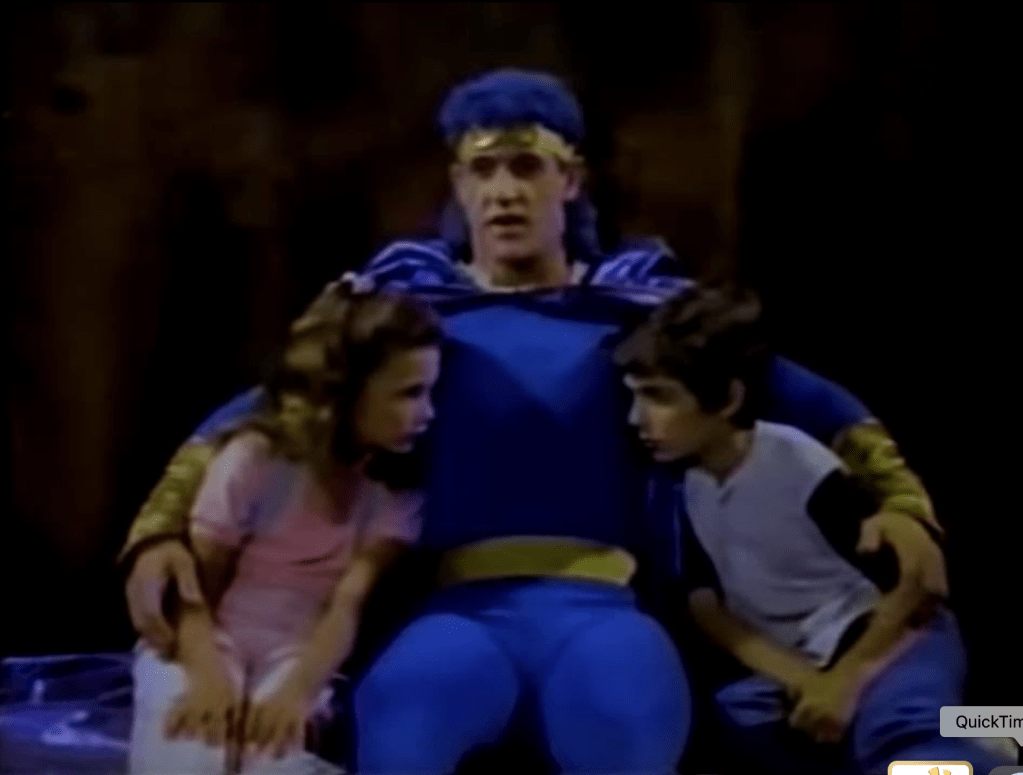
The heroic nature of the wishing machine.
It is no coincidence that Zack and Ashley imagine Rem Lezar while dreaming. REM (rapid eye movement) refers to the sleep phase in which we not only snore in a way that is dangerous for our neighbors, but above all dream away powerfully. In all their songs, Rem Lezar and the two children never tire of emphasizing (sometimes in the wrong tones) how much they long for dreaming (“When i’m dreaming my dreaming of a dream”); how they can surpass themselves in dreams and, above all, how dreams can inspire and drive us in waking life.
In dreams, our wishes and desires often manifest themselves in surreal, unthinkable and symbolic forms. According to Deleuze and Guattari, the cognitive cinema of slumber is driven by so-called wish machines. It is these machines that project the images, scenarios and stories onto our inner screen that reflect our deepest desires and fears. But there is another power in these ever-rotating wish machines: they can make the unthinkable tangible and lead us into new, unknown territories that are not limited by the structures and norms of waking life. In contrast to their outdated Oedipal colleague Freud, who regarded dreams as manifestations of the unconscious, Deleuze and Guattari see desire as a productive and creative force. For them, desire machines are mechanisms that thus constantly create new connections and realities by penetrating the organless bodies (exactly what one is in a dream: a diffuse, disembodied figure).
Rem Lezar is therefore not simply an arbitrarily associated or repressed fantasy that emerges from the clutches of the unconscious; nor is it a wishful thinking of a prototypical ideal, but an active creation that opens up and, above all, promotes new possibilities and realities for the children. Rem Lezar is thus the somnambulistic wishing machine itself. The children fulfil their wishes and desires with this figure and use it to imagine a new world – entirely according to their real wishes and desires – but also to overcome their fears (characterized by the spectre of Vorlock).
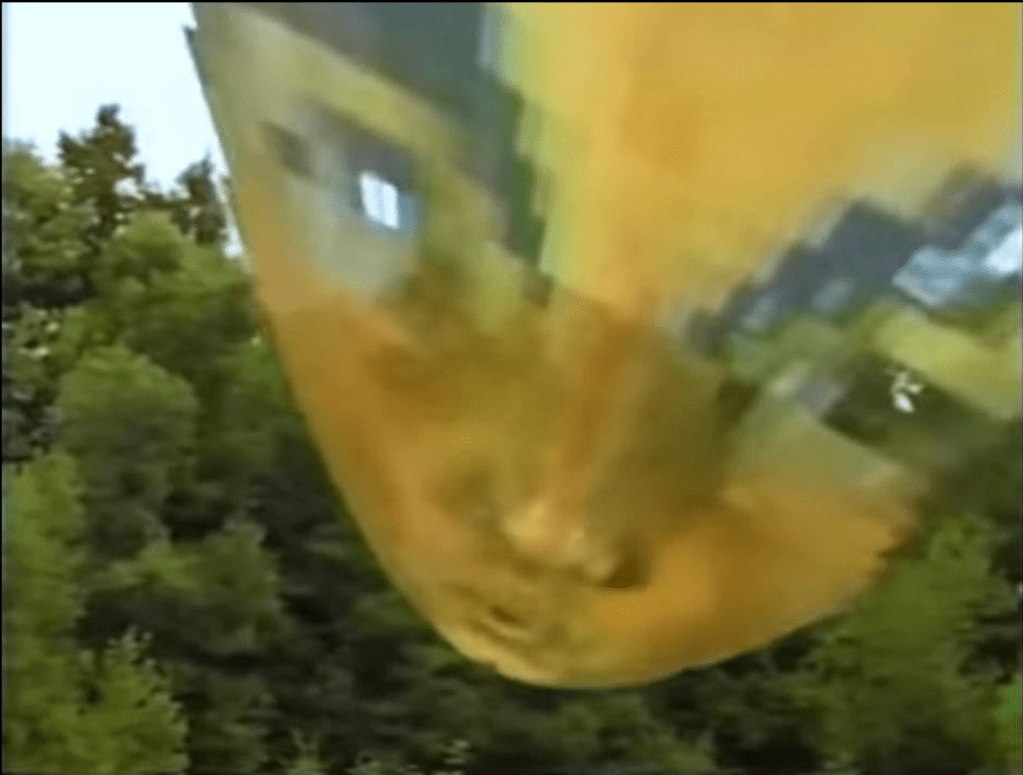
Where dreams sleep.
In this, Rem Lezar stands in complete contrast to the usual superhero fumes that have fogged us for so many years. The superheroes that Marvel and DC unleash on us do not internalize processes to change reality in people at all, but the exact opposite. They want to preserve the infernal (suburban, seemingly idyllic) reality – just as it is. That is why they fight against every threat, every leper and every absurdity that challenges the current reality and questions systematic positions of power. They protect what Mark Fisher calls capitalist realism.
In the “superhero versus villain” battle, there is no dialectical confrontation between hegemony and rebellion. The rulers spectacularly eliminate the rebels without a trace, so that everything remains the same. Example: In the case of Gotham City, this is demonstrated time and again: Not only is the city sinking into chaos and violence, but corruption and injustice are also attacked by the anti-capitalist supervillains (e.g. Joker, Bone, ..), so that they come up with alternative (thoroughly questionable) models of society. However, the fundamental criticism of these spokespeople is silenced thanks to the multimillion-dollar Feldermaus guy. The hero who otherwise cleans up the streets of petty criminals but continues to tolerate the large-scale, systematic corruption and injustice of the capitalist pigs. The same applies to the ideological battles of Killmonger in Black Panther, Thanos, Culture, Ozymandias, etc. etc.
Many of the conflicts in these films are aimed at resolving a system-critical crisis that shakes reality and thus restoring the existing social and political order. Obscenely, these stories primarily neglect the ordinary people who are caught up in this order. Ultimately, only the superheroes themselves and their loyal entourage get a chance to speak. When Erika and Max Mustermann are allowed to take the stage, it is only as opinionated weaklings and victims who have to be rescued immediately by the superhero institution at the slightest stumble. People are thus appeased instead of encouraged so that the system can continue to exist. The superhero stories thus suggest a lack of alternatives to which people blindly and silently submit, otherwise worse evil would threaten, although the evil itself has arisen from the system itself.
In contrast, “Creating Rem Lezar” is neither about preserving the system nor about fending off external threats, but solely about transforming reality from within (from the people themselves). The manifest wish machine Rem Lezar encourages children in an educational way to live out their wishes and dreams and translate them into reality. In the music-style collaged song “We’ve got it all”, Rem Lezar also teaches the children that this transformational power (wish machine) exists in each of us and that everyone can transcend themselves and that we must share this experience with each other. In doing so, he proclaims a non-classical, equal principle of solidarity that does not divide us into the categories of victim and hero, but rather on an equal footing and power-free cooperation.
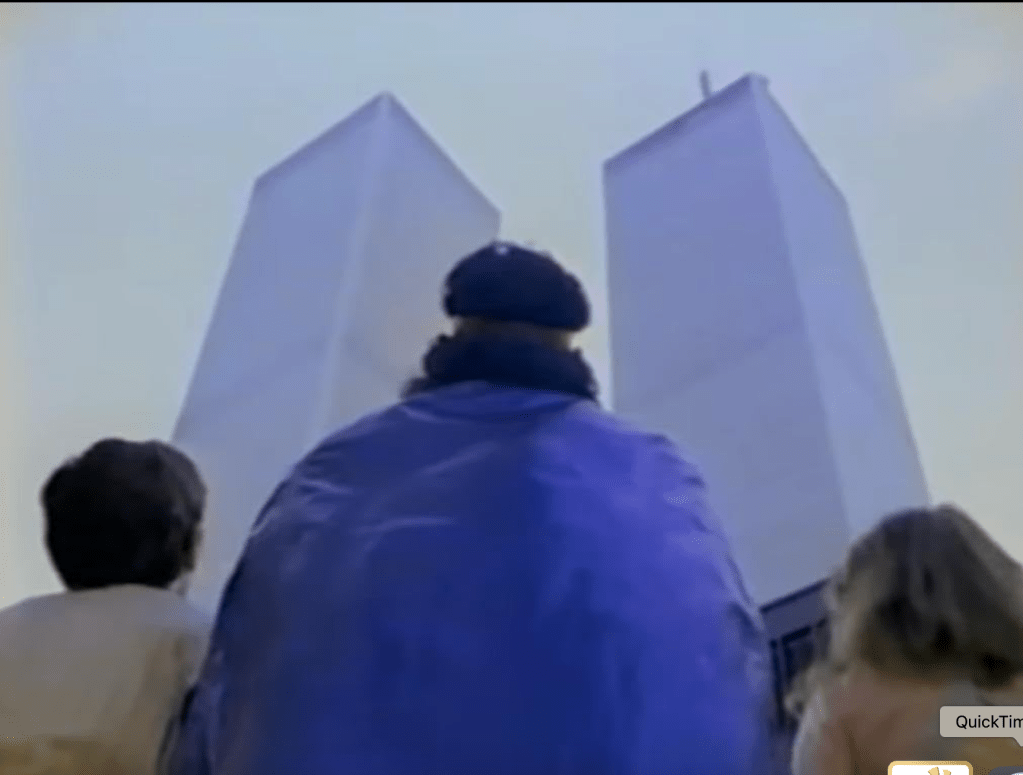
That is why Rem does not dictate a worldly paradigm to the children, but lets them formulate it exploratively and dialectically; for example, when Zach and Ashley consider what this highest point could be and they have to realize that the “highest point the mind can reach” is not the former World Trade Center (as an iconography of capitalism), but that this point can be discovered within ourselves.
Rem Lezar enables these children to believe in themselves, to consciously perceive and appreciate themselves and their fellow human beings, their environment and to recognize the full potential of their imagination and to let it interfere and synthesize with reality (deterritorialization) in order to create a new reality according to everyone’s own wishes and desires (reterritorialization). So instead of submitting to or even defending the existing order, they can finally live freely and in harmony with themselves and reality.
Becoming instead of escapism.
The ideological differences between “Creating Rem Lezar” and the usual superhero films reflect different attitudes towards change and stability. Iron Man, Batman, Captain America & Co. perpetuate a simplified and rigid world in which changes are caused by threats, but “fortunately” neutralized by the heroic deeds of these supermen in order to restore the good old order for the little man. “Creating Rem Lezar”, on the other hand, affirms an ideology of becoming and creation that arises from inner dreams and desires. It offers a vision of change that is not forced by external conflicts, but made possible by the creative power of inner desire.
In this way, the film inspires us to perceive and influence our world with a more open and creative mind (the mind of a child).
Who can look at this movie with irony and degrading sarcasm?
And fittingly, Richard Sanderson has already sung: Dreams are my Reality. Rem Lezar would say: Dreams are our Reality.
Conclusion
It is not a movie. It is an experience.
Facts
Original Title
Length
Director
Cast
Creating Rem Lezar
48 Min
Scott Zakarin
Jack Mulcahy .. Rem Lezar
Courtney Kernaghan .. Ashlee
Jonathan Goch .. Zack
Kathleen Gati .. Ashlee’s Mother(as Kathi Gati)
Scott Zakarin .. Vorock
Stewart H. Bruck .. Principal
What is Stranger’s Gaze?
The Stranger’s Gaze is a literary fever dream that is sensualized through various media — primarily cinema, which I hold in high esteem. Based on the distinctions between male and female gaze, the focus is shifted through a crack in a destroyed lens, in the hope of obtaining an unaccustomed, a strange gaze.
 The Stranger's Gaze
Leave a comment