What is it about?
A young man, who carries the traumas of his childhood around with him like his thinning hair, goes out of his way to murder young women. Even his love for a woman who has serious feelings for him cannot curb his desire to kill.
What is it really about?
His skin is covered in burn scars, because the cigarette his mother took a drag from glowed hot on his skin. Back then, when he was still small and the wounds were still freshly covered with a scab, she wandered around after the intoxication of love that she thought she found in men. He stayed in the bathroom, stayed there because she had locked him in to make love. He stayed in the bathroom, the place where you shit the dirt out of your body and wash the dirt off your body. As if he himself were pure filth.
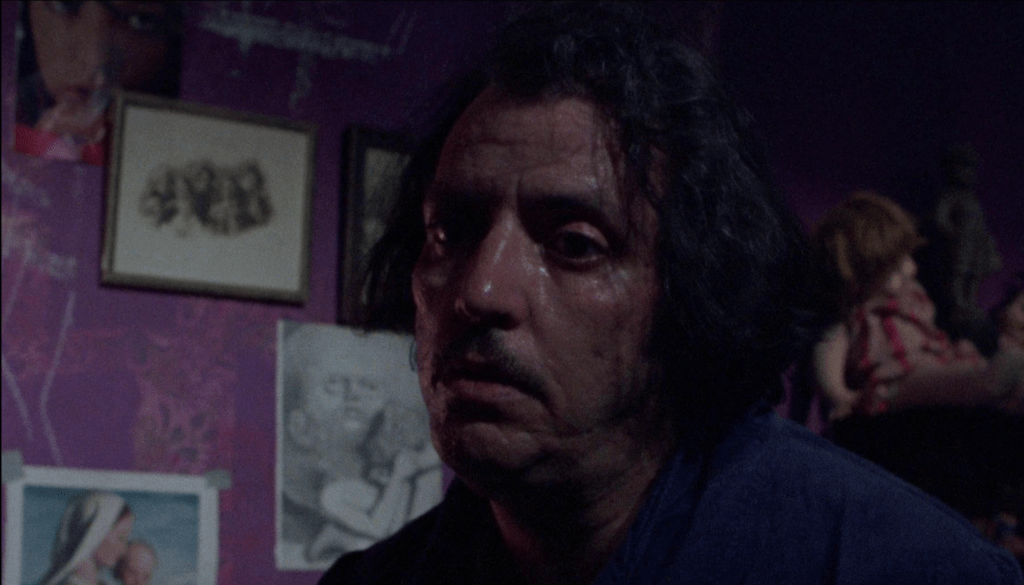
His body is chunky, sluggish and misshapen. His breath a puffing rattle. His shoulder-length hair bears the sweat of the previous night. His fingernails are nibbled short. His pale skin shines greasy between the sprouting body hair. The areas of his body that don’t shine are dominated by burn scars. Burns from an ancient past that still burn all the way to his chest. Every morning, when he rouses himself from his nightmarish sleep, he always looks at those scars to see if they are still there, if the pain in his chest is still there. And then he goes out.
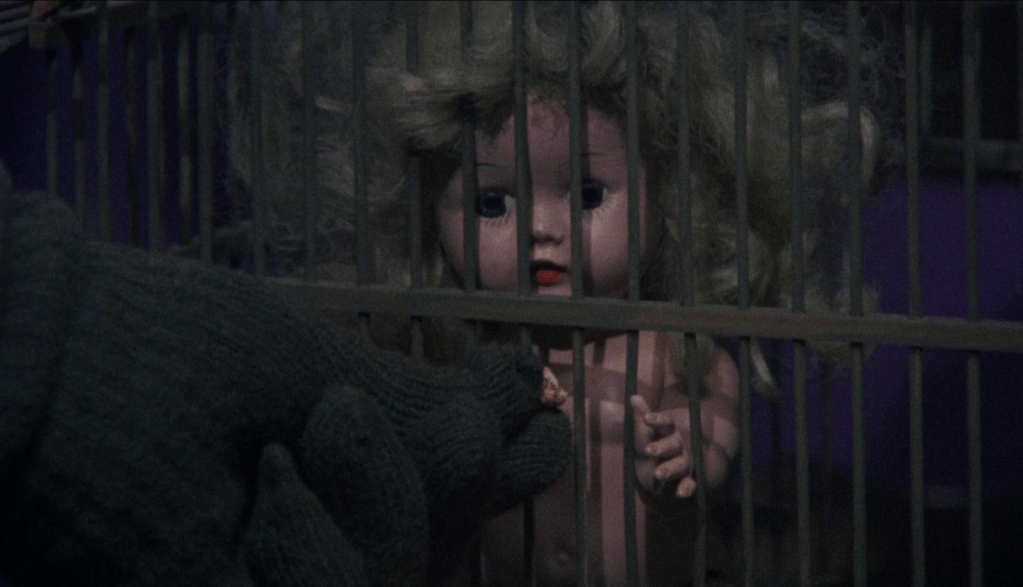
His dwelling, nowhere in New York City, is a niche-like, windowless room in which a neglected television is blaring away. On the purple-painted walls hang erotic pictures of women, but torn in the places where the intimate intoxication of love is lusted after. In the torn pictures of women, the purple of the wall, the color of death, now covers the women’s intimate areas. Mannequins with their rigid bodies and dead eyes are his only company.

His demeanor is friendly and polite. The neighbor in his house doesn’t suspect what kind of schizophrenic monster dwells behind his friendly nature and scars. Nor does the prostitute he asks to pose like a model in a photo shoot; just like the moment when the flash captures the female body standing rigidly in a pose like a mannequin. But as soon as the purchased intimacy between him and the prostitute has to be redeemed, he loses his mind and his beautiful mother appears to him in the uninteresting face of the prostitute, whom he chokes and strangles, choking madly until her last cries are drowned out by his guilt. Then he scalps her. And with the scalp, he immortalizes and preserves them in his dwelling when he pulls the bloody, blunt hair of the dead woman’s head over the bald head of a mannequin and nails it down, panting.
His wild rampages and killings terrify the whole of New York City. He chooses his victims seemingly without motive. But it’s the people’s busy, dirty lust that tempts him to strangle, shoot and stab. Just as his mother was once lost in a dance of sweet sweat and semen, while he was stuck in the room where she had previously made herself beautiful and where her perfume and the penetrating scent of toilet freshener floated in the air and beguiled him. For him, this is an ugly, depraved city for ugly, depraved people that seems to live on the night. Where there seem to be no policemen, no civil courage. But it is teeming with voluptuous people who give themselves over to sexual lust. Or, like him, the lust for murder.

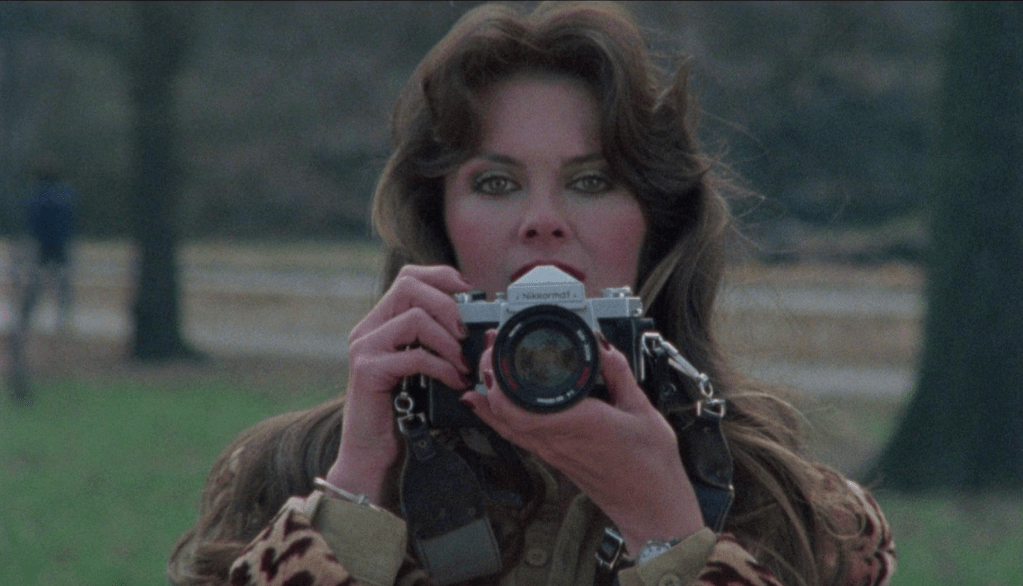
His schizophrenia behind the burn scars seems to be tamed only by a female photographer, because she also preserves the women around her with a camera that lights up like a flash when he fires, just like his shotgun. She objectifies people for her art, just like the dead woman, scalped and reborn in the mannequins that keep him company. And only the photographer manages to escape his murderous hands; she, who looks like his mother, to whom he is still submissive; in whom his schizophrenia first rises when the photographer kisses him maternally and begins to condemn him when he gets the feeling he is about to be locked back in the bathroom by the disappointed, evil mother, while she writhes in lust with all of New York City.
His sacrificial catharsis ultimately stimulates the woman who looks like his mother, while all evil, all shame and psychological filth was poured over him by the woman who was his mother. And the sacrificial ritual ultimately bears witness to the company that shared his dwelling with him, rigid and dead, as mannequins; who never uttered a single word of contradiction or snuggled up to him erotically, but always stood by his side in confidence; which for them, however, was hell, locked up in these eternal mannequins, objectified and on display; existing solely to satisfy the shame-filled gaze of an impotent, sad, terrible man.
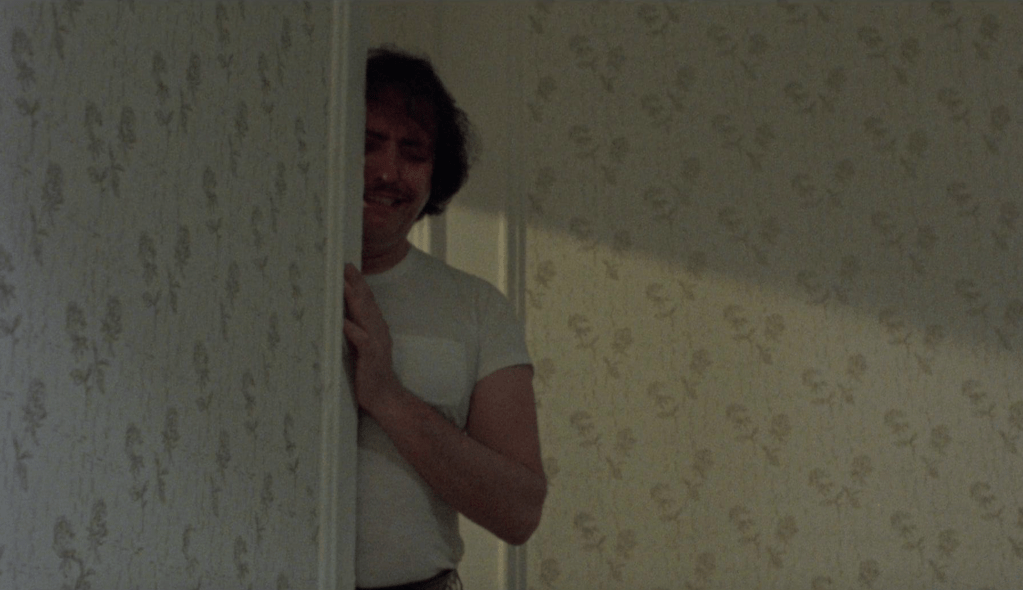
His violence as a display of his sinister nature does not turn him into a mannequin but rather into a puppet of thrill, disgust and shock, when the observation and persecution of the victims is shown and observed by us viewers in tense scenes lasting several minutes. When the synth sound assaults our ears and the camera hovers elegiacally around the brutal events. Always close to the eponymous madman and what makes him mad.
Conclusion
A nasty movie about a nasty but also pitiful man.
Facts
Original Title
Length
Director
Cast
Maniac
88 Min
William Lustig
Joe Spinell as Frank Zito
Caroline Munro as Anna D’Antoni
Abigail Clayton as Rita
Kelly Piper as Nurse
Rita Montone as Hooker
Tom Savini as Disco Boy
What is Stranger’s Gaze?
The Stranger’s Gaze is a literary fever dream that is sensualized through various media — primarily cinema, which I hold in high esteem. Based on the distinctions between male and female gaze, the focus is shifted through a crack in a destroyed lens, in the hope of obtaining an unaccustomed, a strange gaze.
 The Stranger's Gaze
Leave a comment