What is it about?
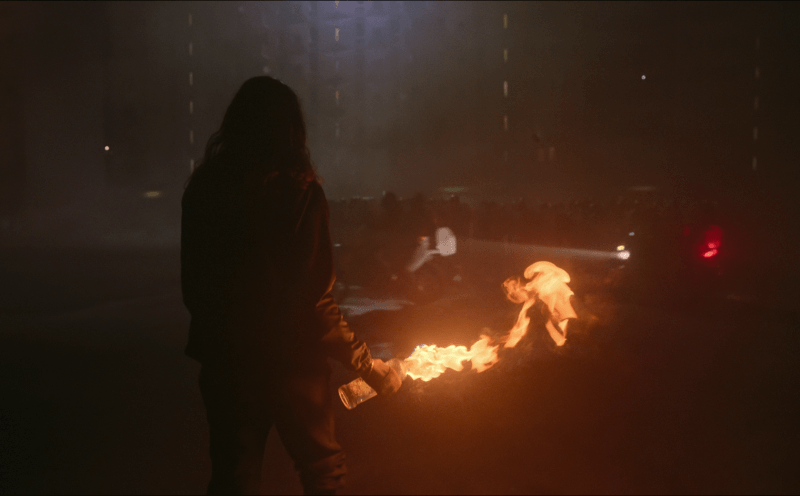
After the death of a teenager, the young people break out of the banlieues to open up the rift in society. What they tear out are the fundamental problems of contemporary France. The French revolution that starts … and dies.
What is it really about?
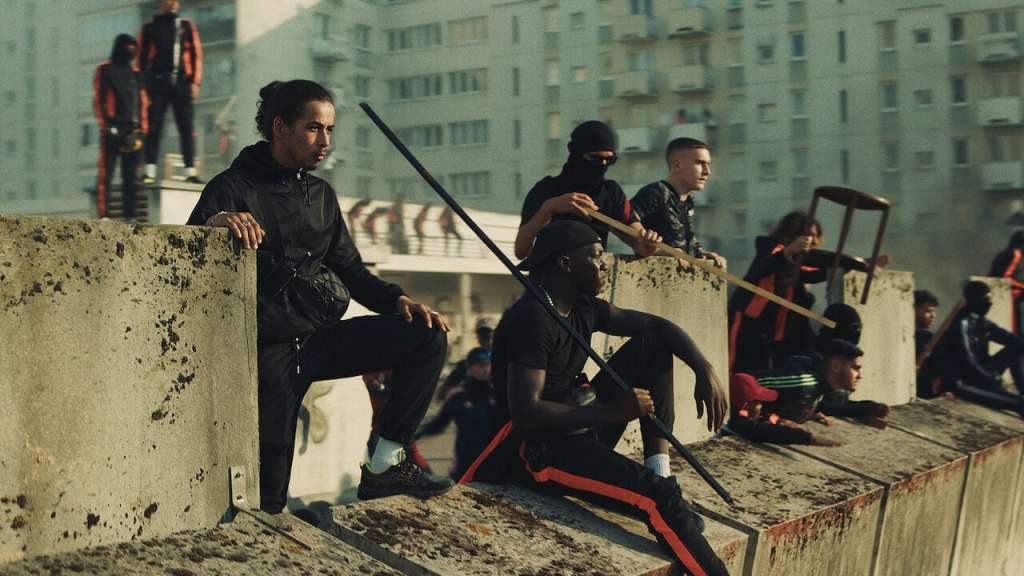
Once, my memories of this still scream in my ears, I succumbed to these thousand and one open wounds that constantly stabbed through my body and what haunted it as a spirit. Not a single droplet of blood came out of the wounds, for I felt completely bled dry by the vampiric authorities, rulers, authorities who shimmered in the socio-economic cosmos. And their long shadows blocked my view into the light, whereupon I searched as a loose silhouette for a plaster to staunch the wounds. I found it wherever I went. In front of my feet. On the streets that were paved with the broken stones of those ruined buildings that they had let wither next to the paths and that they had dismantled stone by stone for a common future on which we were to walk; but which were only ever trodden by them. And what could I do but loosen the plaster with a screwdriver, take control of the plaster to heal my own wounds. But as I disappeared with the plaster in my hand into the neglected, streetlamp-strewn alleyways that I considered my home, I left behind me only new open wounds. On the streets that were no longer paved, but potholed, hollowed out, and on which no one could now stroll lost in thought without breaking their heads, legs and arms.
To my amazement, the gaping wounds widened instead of healing. Even the plaster wasn’t enough for them. So I tried to burn out the wounds. With bulky waste, garbage containers, building fences that were carted in, piled up in a heap as high as the Tower of Babel, high enough to light a fire under the asses of the self-proclaimed gods and warm us up on their burning bodies and burn out the wounds. And even though it lit up all the darkened streets, the fires ultimately left only paltry scars.
I lay there completely paralyzed, disillusioned and hopeless, not daring to look at the open wounds and countless burn scars without plunging into an eternally paralyzing stupor. I couldn’t bear to see the wounds and scars reflected in the shop windows; shop windows in which they displayed their pompous and dapper evening gowns for their hypocritical Caritas galas and the strictly choreographed TV appearances. Entertainment to keep you down. So I took stone after stone and plaster after plaster in my furrowed hand to shatter my reflection and their illusory images in the window panes. The memories of my wounds and scars briefly disappeared in the shattered image. But in the midst of the shattered glass, even the most graceful face was transformed into a distorted grimace. Including mine, which had perhaps always been a grimace.
Not to mention those others who struggled to find cures with empty words. We woke up many an afternoon sleeper with our megaphones or covered up existing street signs with our banners.
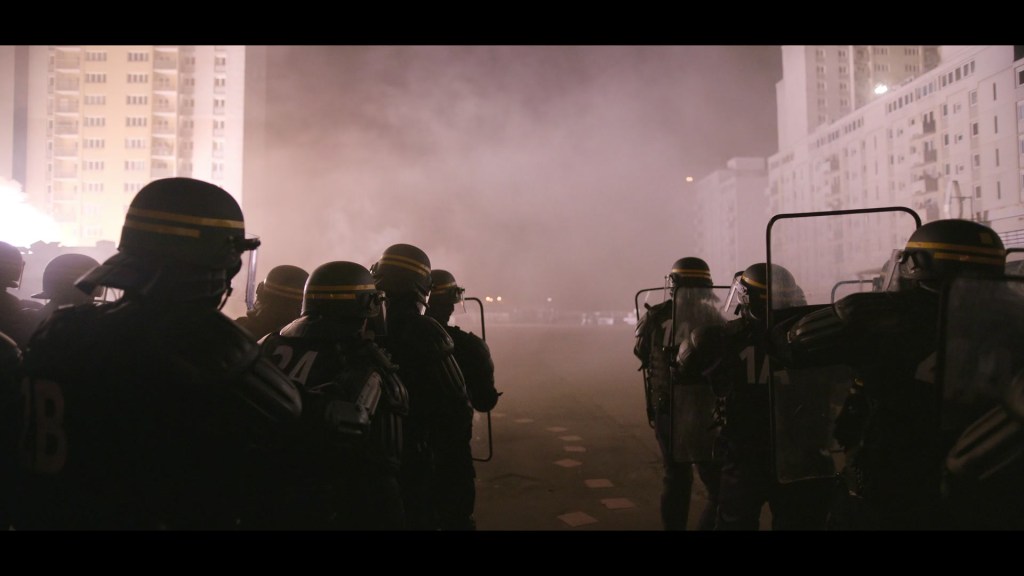
I was never alone. A mob gathered around me, I gathered around them. We, the wounded, the miserable, burnt out, wounded. I soon heard all the sirens of the authorities in the angry shouts of that mob. With blazing flames in my hand, I wanted to run closer to them to hear them better and to silence them so that we could be elevated, but I stumbled over the millions of holes in the ground. And because the path was blocked by meters of flaming fire, I had to take a detour. On the detour, I was startled by myself in a shattered shop window. My heart stopped in shock. It just stopped. And then – in the distance – I heard the echoing slogans “Liberté, Egalité, Fraternité” being bludgeoned to silence by the batons of the authorities. This was the rebellion that carried the breath of revolution, but revolutionized nothing.
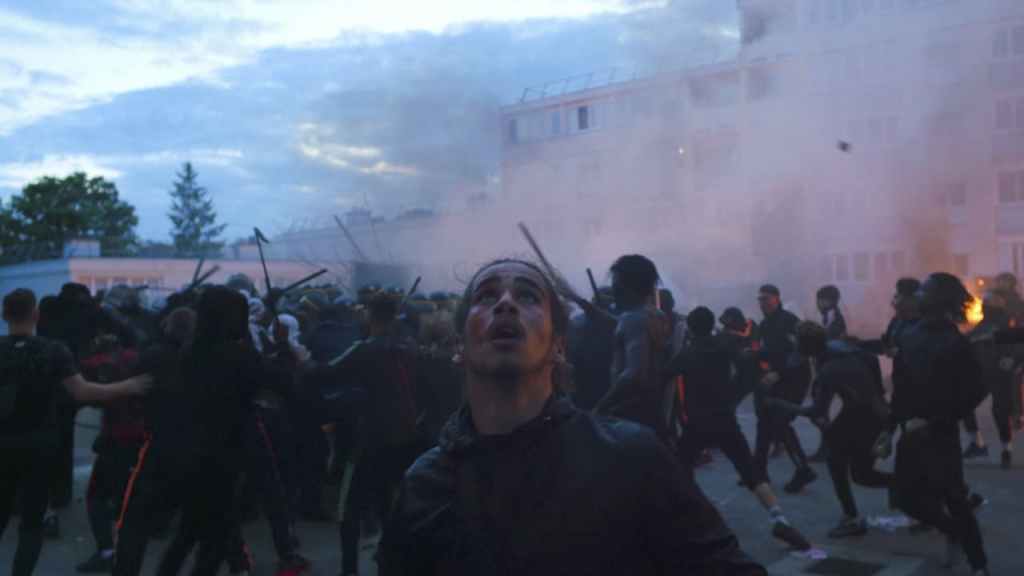
This is Athena, the banlieue in whose concrete prison we grew up, in which we imbibed the mother’s milk of Athena; she, the goddess of wisdom, strategy and struggle, of art, craftsmanship and manual labor, and goddess of protection. And we her illegitimate children. When one of her brothers is killed, beaten to death by men in police uniforms, we form up to demand justice. Just as the biblical Talion formula says: “Life for life, eye for eye, nose for nose, ear for ear, tooth for tooth”.
We take the authorities by surprise in a furious act of rebellion. The counterattack, after they have beaten us down again and again. A spiral of escalation that cannot end well, a maelstrom of violence accumulating excesses until not only wounds gape, but the wretched flesh behind the wounds bursts out so that they can finally see it and no longer close themselves off from it. This violence is our last chance and Athena is our bastion; the walled-in values of freedom, equality and fraternity are being smashed in their faces. But unfortunately, our rebellion, our revolution, is a rebellion, a revolution against liberty, equality and fraternity. We give up freedom by entrenching ourselves in the narrowest of spaces, seeking protection from the wolves we have attracted; those wolves whom we do not regard as our equals, who do not regard us as equals either. And finally we kill our brothers until all that remains of us is scorched earth, in the hope that it will provide fertile ground for a better future.
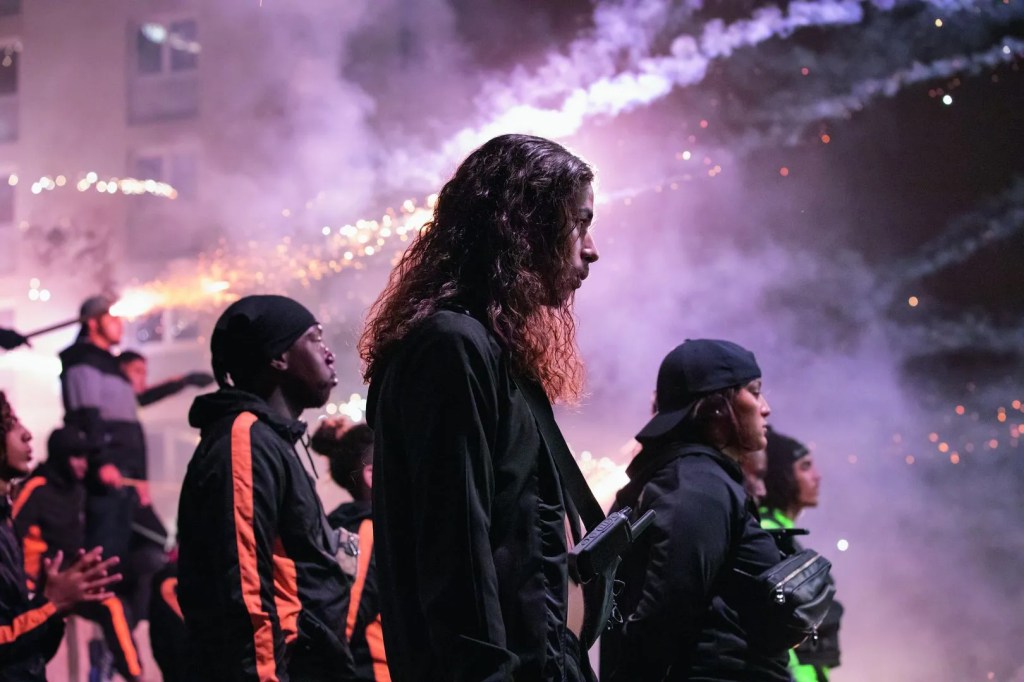
This is Athena. This is a hypnotic frenzy that artfully reworks a brutal uprising of the oppressed against their oppressors. The chaotic events quickly come to a head in long, highly impressive plan sequences. The socio-economic explosives are detonated right at the beginning and can be heard as a bang for over 100 minutes. While at the beginning the cinematographic spatiality spreads across an entire district, the production channels itself deeper and deeper into the narrow confines of the banlieues. The social uprising is reduced to a familial one. In the end, it is once again the people in the banlieues who emerge as the losers. Partly because they themselves have allowed it to escalate to this point, because these outsiders only have anger and rage. They have no hopeful values; they can’t even manage to find a common understanding among themselves, among brothers. If that doesn’t work in the microcosm of the family, how can it work in the macrocosm of society? Thus, violence against the authorities ends in self-violence, because they themselves adopt an appropriate attitude of authority like the armed forces against which they want to take action. Only in a destructive, nihilistic motif. The end of the film puts the crown on the whole thing, broadening the narrow perspective to show that this fight is a fight against the wrong enemy and that this fight is a fight to one’s own ruin.
Conclusion
The enigmatic camerawork makes up for weaknesses in the script. Rarely have you been so close to the revolutionary events.
Facts
Original Title
Length
Director
Cast
Athena
97 Min
Romain Gavras
Dali Benssalah as Abdel
Sami Slimane as Karim
Anthony Bajon as Jérôme
Ouassini Embarek as Moktar
Alexis Manenti as Sébastien
What is Stranger’s Gaze?
The Stranger’s Gaze is a literary fever dream that is sensualized through various media — primarily cinema, which I hold in high esteem. Based on the distinctions between male and female gaze, the focus is shifted through a crack in a destroyed lens, in the hope of obtaining an unaccustomed, a strange gaze.
 The Stranger's Gaze
Leave a comment