What is it about?
A dwarf uprising escalated quickly.
What is it really about?
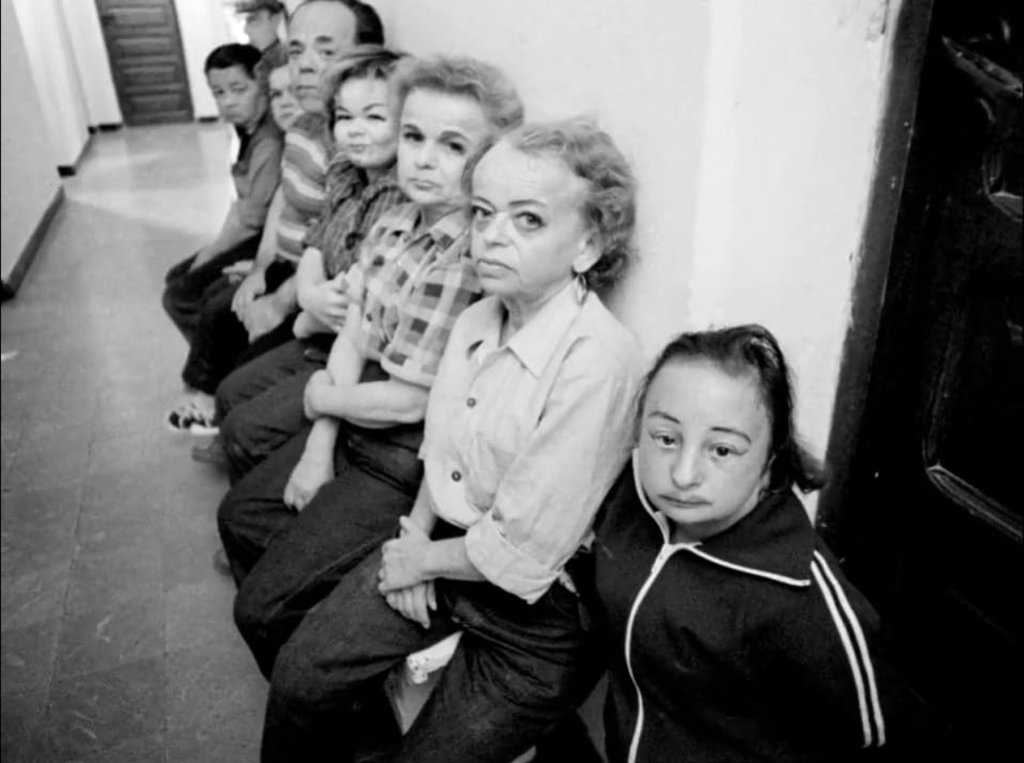
Even dwarves started small. And have grown to the smallest. They couldn’t grow up because they were stuck in children’s bodies, but because they were locked up in an orphanage. At the edge of the world, far and even further away from any normative civilization. Here on Lanzarote. Here in the barren desert landscape, where only the wind knocks on doors.
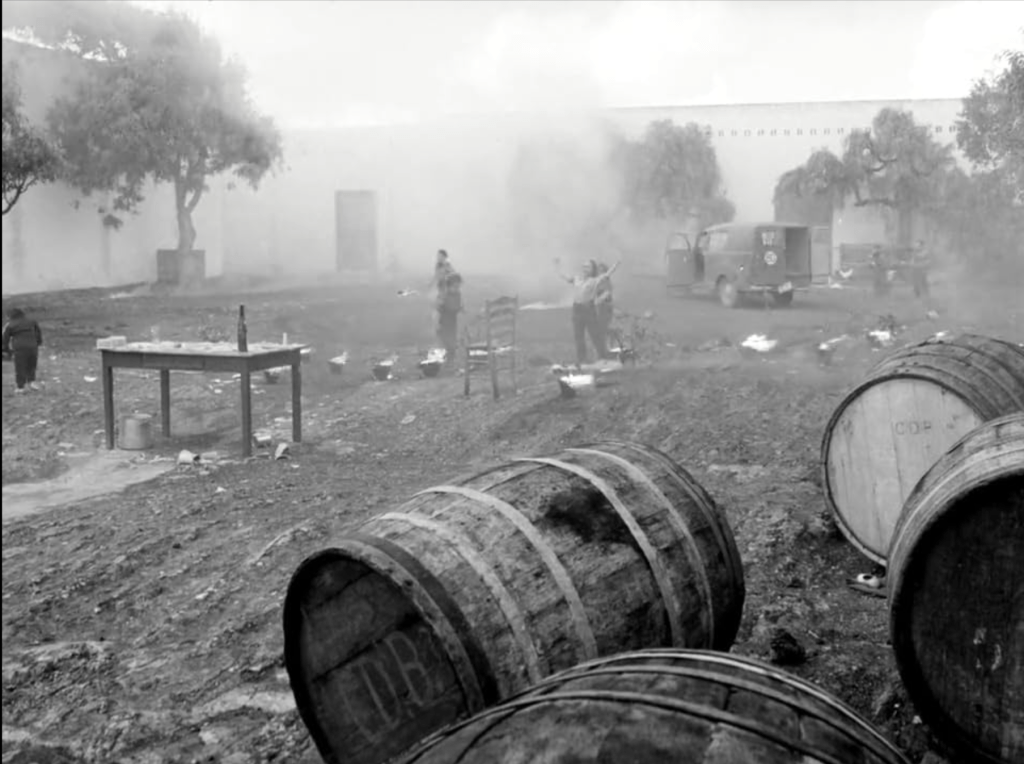
But then the educators disappear. Are swallowed up by the earth or by the far and even more distant civilization. Appear to be on an excursion. A vacuum of power, in the burnt caramel of the sugar bread and the extinguished echo of the whip, sucks the human, the all-too-human out of the low-rise buildings. Where nothing reigns, chaos reigns, causing the orphanage to tremble and the remaining little ones to awaken from their cockroach-filled sleeping chambers. Those who have been denied an outing. The black sheep among the gentle, the disdainful among the lepers, the neglected among the forgotten. In the sweet, heavy morning dew, they rise above themselves, free of all moderation and order, just as the sun rises over the hill in the cloudless sky. Before the sun reaches the zenith of their hour-long daily march, they try out the dwarf uprising and the anarchic excess of violence escalates.
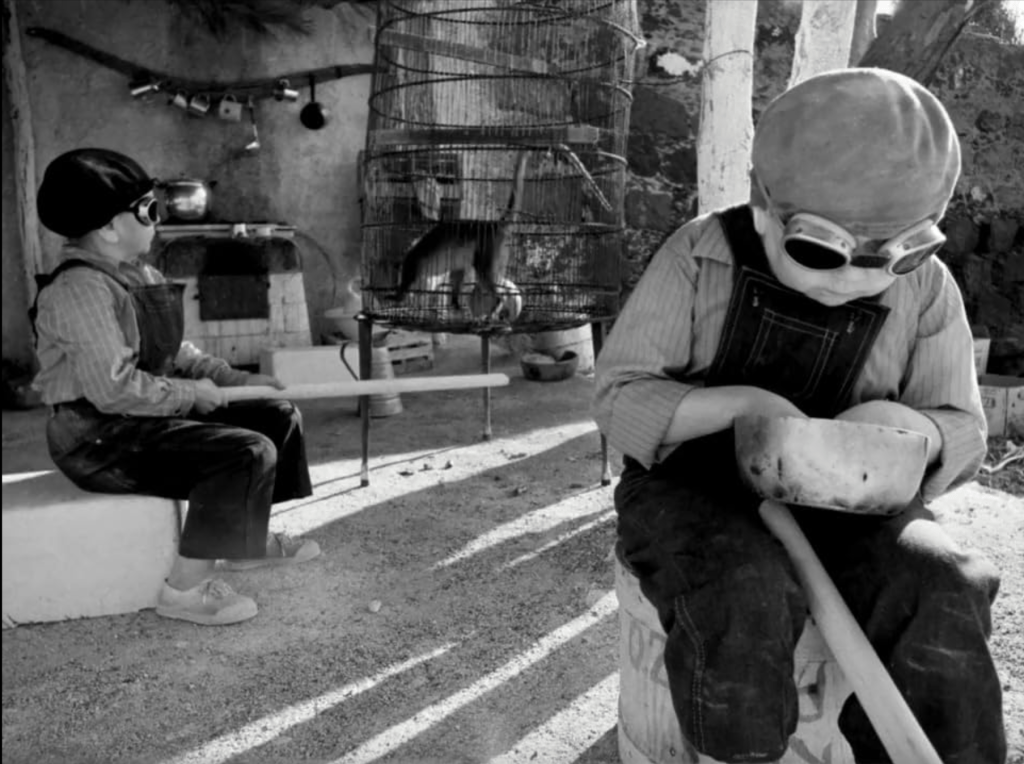
A sow is slain and the animal world is executed with it. A tree is set on fire, plant pots are smashed and the flora destroyed with them. Blind little ones, as the weakest of the weak, are maltreated for sardonic evil laughter and with them the morality of minority protection is undermined. Despite their reluctance, the little ones are married off by decree of the masses, forced to make love to each other and with them the feeling of love and affection is cynically discolored. A van is short-circuited and misused as a dust-raising ride in the world’s bleakest theme park and technological progress is slowed down along with it. A monkey is nailed to a cross and led through the littered courtyard as a theophoric figure of light, negating all religiousness. The only remaining authority has to hide behind closed doors, is mocked and attacked at the edge of his exile and reason is wiped out with him.
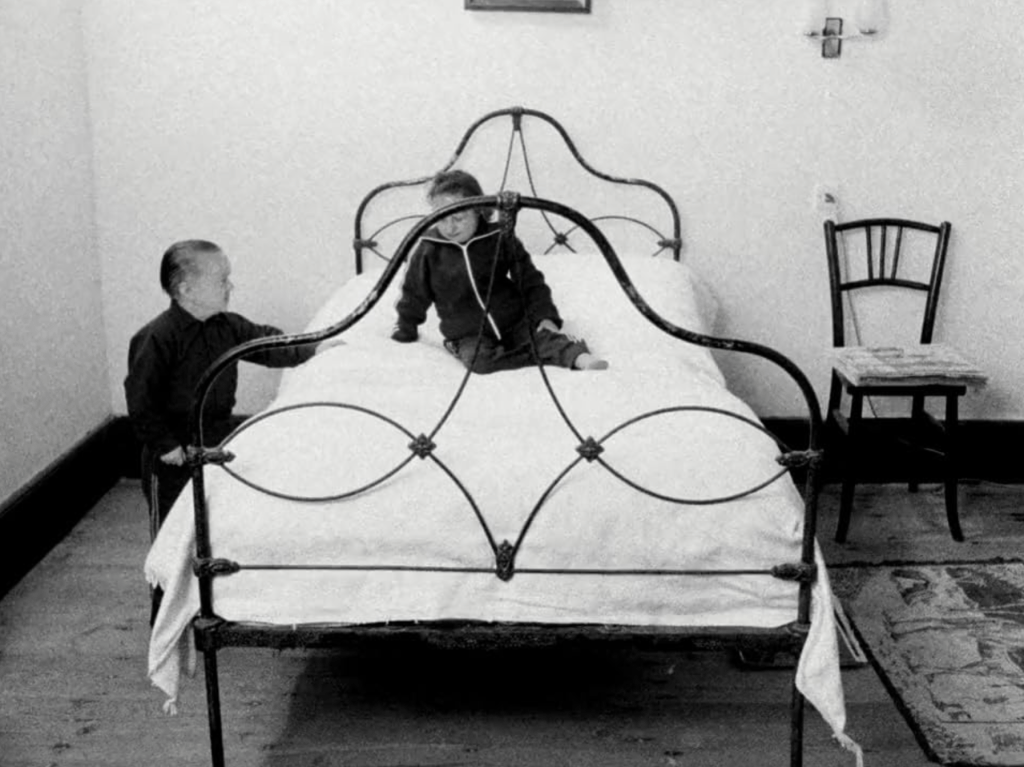
This dwarf rebellion mimes the negation of all values. The rebellion against the universal status quo. The rebellion against a world for which these dwarves only seem to have fallen short; no, this world is too big for them. The view of the big picture is not from a bird’s eye view but from a frog’s eye view. But not only for the so-called dwarves, but also for the tall people. This is a world that people try to tame with rules and walls. A world that is explored and reshaped with hoe and axe, while it responds with avalanches and tsunamis, burying and devouring finite life. A world that wants to be understood with compass and pencil, but forces theorists to constantly erase and repaint the evolutionary spirit of humanity, without ever being able to wear the world formula as a tramp stamp. A world that, due to its unbridled and unbroken perfection, completely overwhelms both young and old. A world that, as a universal authority, dictates the limits of time, the limits of all physicality, the limits of consciousness.
The world cannot be grasped, because thoughts cannot be grasped by hand. For a light to come on, a fire must be lit. To escape from the shadow play of Plato’s cave and, torch in hand, to project one’s own body into the world as a shadow play. Understanding the world means taking the world apart. To break it down into individual parts, to atomize it. Physically and mentally.
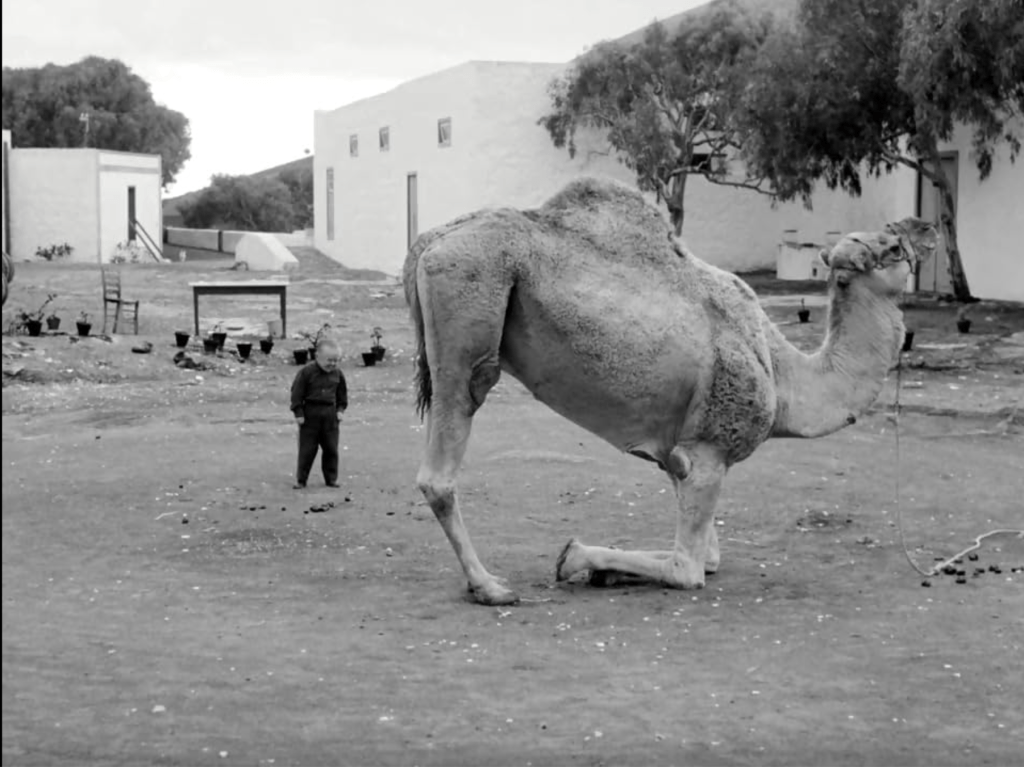
The dwarf uprising presented by Werner Herzog is an analogy of the omnipresent attempt at rebellion, which stems from a pure, innate helplessness that is written into the genes of every human being – big or small. From today’s perspective, choosing the transgressive presentation only with the help of people of small stature is hardly conceivable without provoking another rebellion. These Minions on PCP and LSD convey a surreal image of humanity that is both cute and irritating in an unreal way. A vacillation between smiling and shock.
Conclusion
A nihilistic and abysmal film.
Facts
Original Title
Length
Director
Cast
Auch Zwerge haben klein angefangen
96 Min
Werner Herzog
Helmut Döring as Hombré
Paul Glauer as Erzieher
Gisela Hertwig as Pobrecita
Hertel Minkner as Chicklets
Gertrud Piccini as Piccini
Marianne Saar as Theresa
Brigitte Saar as Cochina
Gerd Gickel as Pepe
What is Stranger’s Gaze?
The Stranger’s Gaze is a literary fever dream that is sensualized through various media — primarily cinema, which I hold in high esteem. Based on the distinctions between male and female gaze, the focus is shifted through a crack in a destroyed lens, in the hope of obtaining an unaccustomed, a strange gaze.
 The Stranger's Gaze
Leave a comment