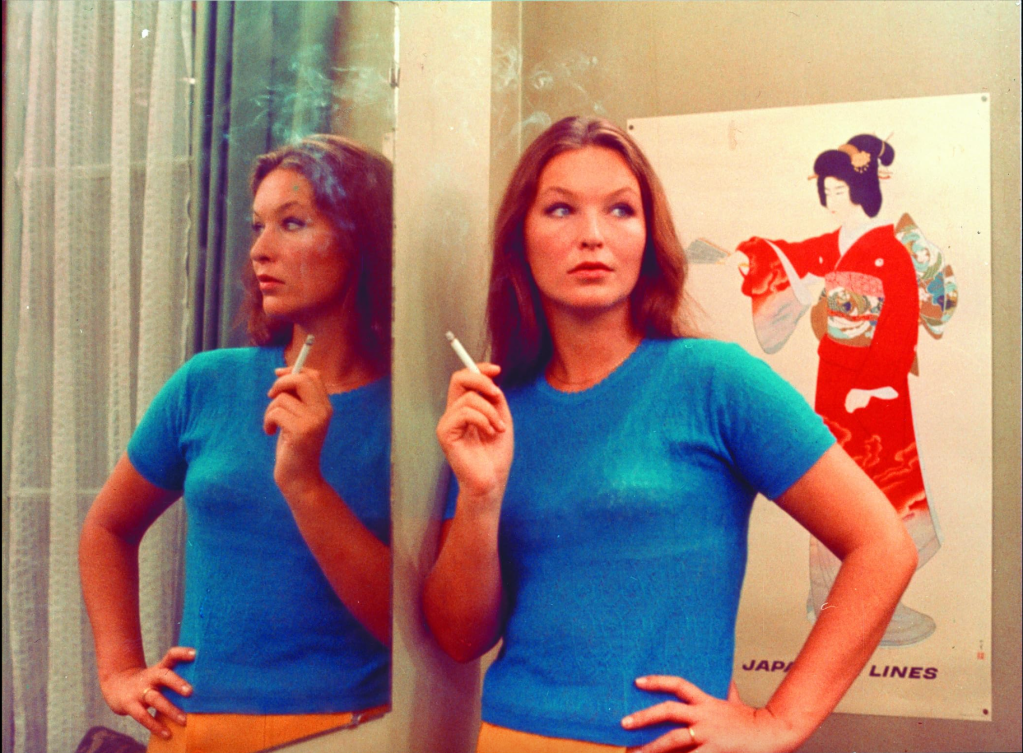
What is it about?
If you want to be beautiful, you must not only suffer, but also prostitute yourself.
What is it really about?
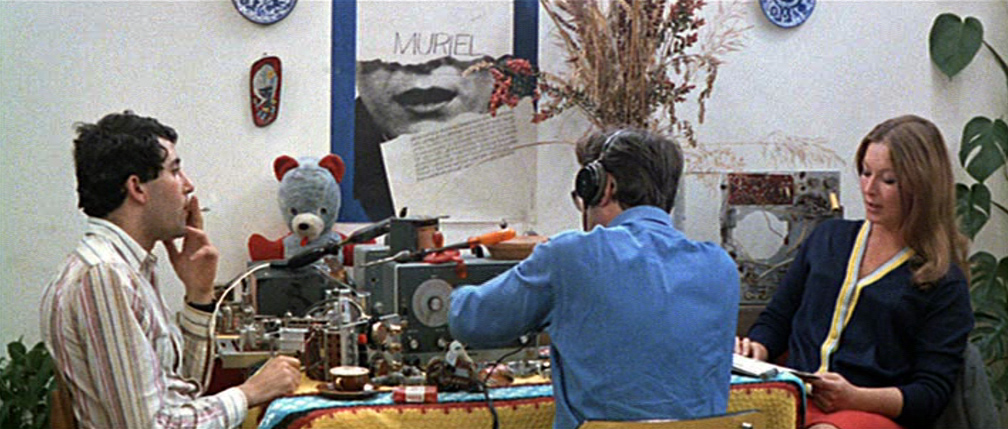
2 or 3 things I know about her. Or also not know. And even more than just 2 or 3 things. She is a young Parisian woman. She is introduced to me by a whispering male voice from off-screen. She is Marina Vlady, actress of this film. She says, “Speaking is like quoting the truth” and turns her head to the right. This, according to the off-screen voice, has no meaning whatsoever. She is also Juliette Jeanson, the main character of this film. She says, “She has to get by somehow.” Here in this Paris of the late 60s. She turns her head to the left, which, according to the off-screen voice, has no meaning. The off-screen voice is Godard, the director of this film.
The obvious trinity overlays the conventional narrative: the director, the actress, the cinema; the Father, the Son, the Holy Spirit. Through the obviousness, the cross is placed on the shoulders of the spectator, as he equally perceives and passes on parts of this fiction in his reality.
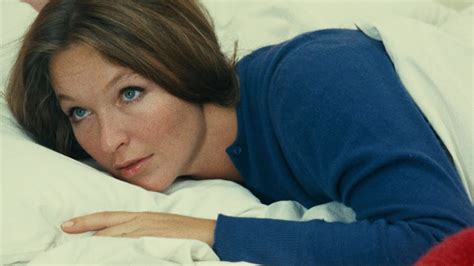
In “2 or 3 things I know about her” the main character Juliette refers the image of young housewives of a bourgeois Paris. A Paris that is contradictory in itself, that is in a state of upheaval, which the director observes anxiously in his whispering voice. A devaluation of European social values through the valorization of consumerist, capitalist values, injected down the throats of a lateral-Atlantic nation with the help of Marlboro Coca-Cola. A nation simultaneously waging David vs. Goliath war with bloody feud at the end of the Pacific in a country called Vietnam.
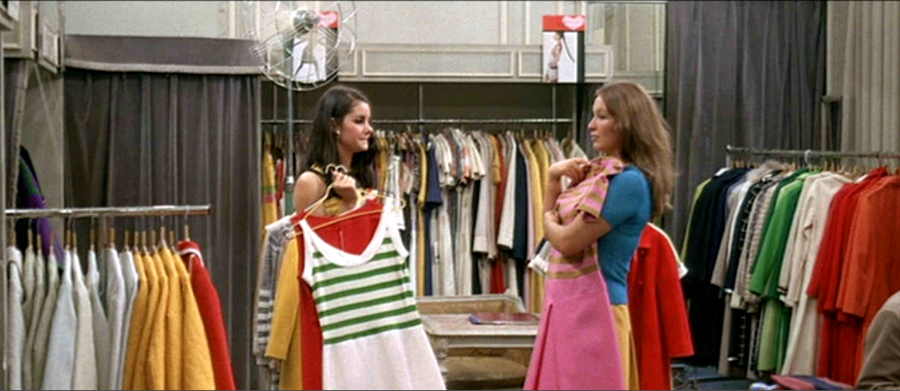
Juliette’s world is only rudimentarily intertwined with the inhumanist events in Vietnam, but her life is in another guise of inhumanism: objectification, that is, the petrification of the subject. In the midst of tempting advertising posters for travel, fashion, cars, beer, a desire is awakened that passes from the human to the representational. You are what you have, instead of being what you think. Juliette already seems more and more transformed from subject to object. Despite her beautiful, Kirghizian face, it remains petrified and motionless. She moves her body sluggishly, laboriously through the shopping stores. Her voice rarely accentuates, rarely manages to sound out of the lack of emphasis. She will smile when a friend says to her: “Objects exist. And if we pay attention to you as people, it’s because there are more of them than people.”
She (and several other Parisian women and men) are put on display in this objectivist world. They present themselves for the presentation of objects. Juliette, it turns out, prostitutes herself for this during the day. Not to feed her family, but to be able to buy a new dress. For the acquisition of objects, she makes herself an object. How can this be better depicted than in a scene when Juliette meets with a suitor. In parlor, she asks him to avert his gaze as she undresses. When he mockingly asks why she wants him to, since he will see her naked in a few minutes anyway, she replies briskly, because she wants him to. The terse answer, however, hides the real reason: the removal of the clothes is the transformation from subject to object. This transformation must not be observed, because it would expose absurdity only inhumanistic way of thinking. And later, with an American suitor she will even wear a shopping bag of Trans World Airlines on her head because he is so wild about it. The face of Europe disappears while the body can be exploited.
The dilemma of subjectivity and objectivity extrudes not only from the view of the environment on the individual, but also in the inner life itself, the view from man to his environment: what is objective reality and what is subjective reality? The characters who have their say within this fiction do not know. They discuss it and do not discuss it. When they speak to another character, they also speak their thoughts aloud in the middle of the conversation, but only to us viewers. The other figure in the picture does not hear the thoughts. Thoughts of shame, of being overwhelmed, of sensuality. And when characters don’t speak their thoughts, they no longer have thoughts.
For Godard, cinema is, not only 24 times truth in a second, but language and image. Around both basic elements he lets his thoughts revolve audiovisually through the voices of his characters. For this he also makes use of Wittengestein and muses: “To say that the limits of language, of my language, are those of the world, of my world, and that by speaking I limit the world, I end it. And when mysterious, logical death removes these limits, there will be no question, no answer, only indeterminacy.”
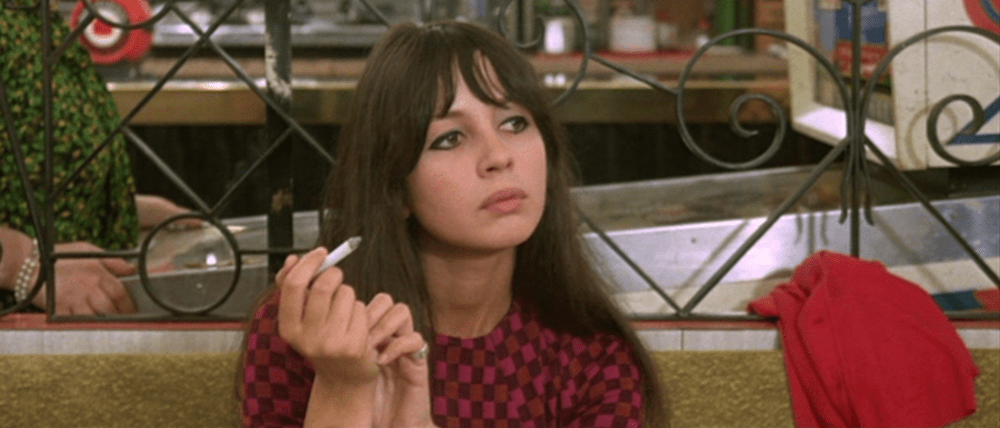
This is the omnipresent burden of the main character in the film. To never be able to overcome the limits of her language, to be able to express herself intelligibly, in an advertising- and war-loud everyday life, whose prostitutive and consumerist events determine her thinking and feeling at all times and drive her further into loneliness. Into isolation instead of into a world where one can love and be loved. This is the empty future as an echo of the silenced past.
And this only applies not to the individual but also to cinema. It is not for nothing that Godard will proclaim the end of cinema a year later in Week End.
Conclusion
Wonderful real satire on capitalism and as a bonus: You don’t learn 20 or 30 things about her.
Facts
Original Title
Length
Director
Cast
2 ou 3 choses que je sais d’elle
87 Min
Jean-Luc Godard
Marina Vlady as Juliette Jeanson
Roger Montsoret as Robert Jeanson
Anny Duperey as Marianne
Raoul Lévy as John Bogus
What is Stranger’s Gaze?
The Stranger’s Gaze is a literary fever dream that is sensualized through various media — primarily cinema, which I hold in high esteem. Based on the distinctions between male and female gaze, the focus is shifted through a crack in a destroyed lens, in the hope of obtaining an unaccustomed, a strange gaze.
 The Stranger's Gaze