What it is about?
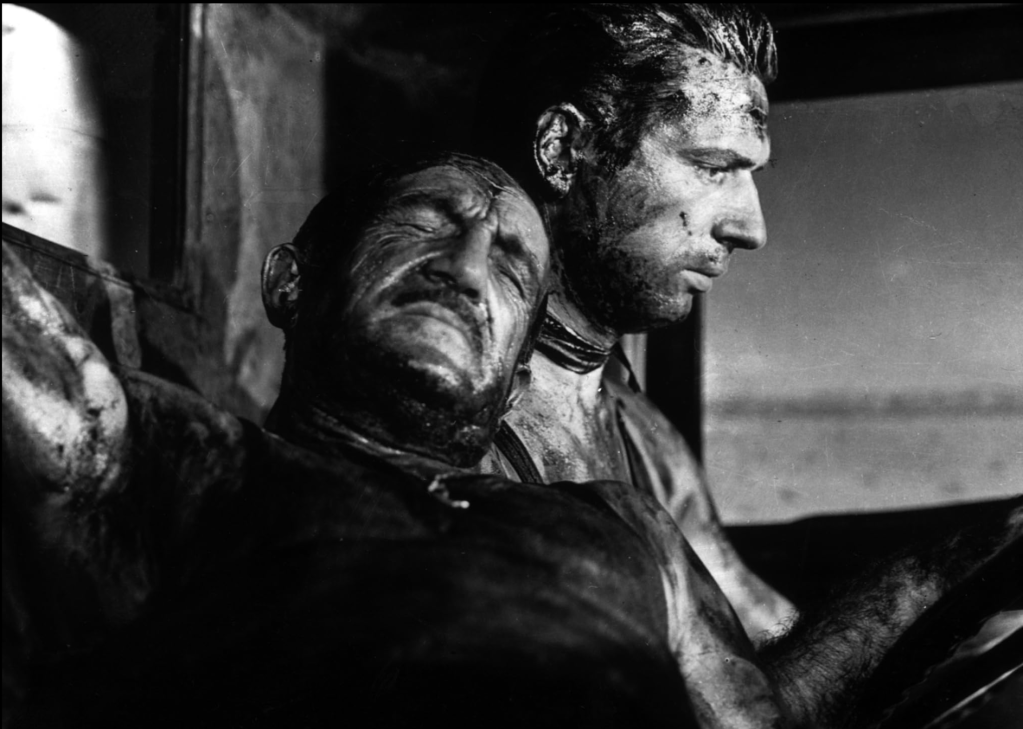
In the middle of nowhere, four lost men embark on an explosive journey. For the good of capitalism.
What is it really about?
Heavy vehicles with highly explosive contents have to be moved through rough, dangerous terrain? Reminds me of Hideo Kojima’s masterful video game Death Stranding.
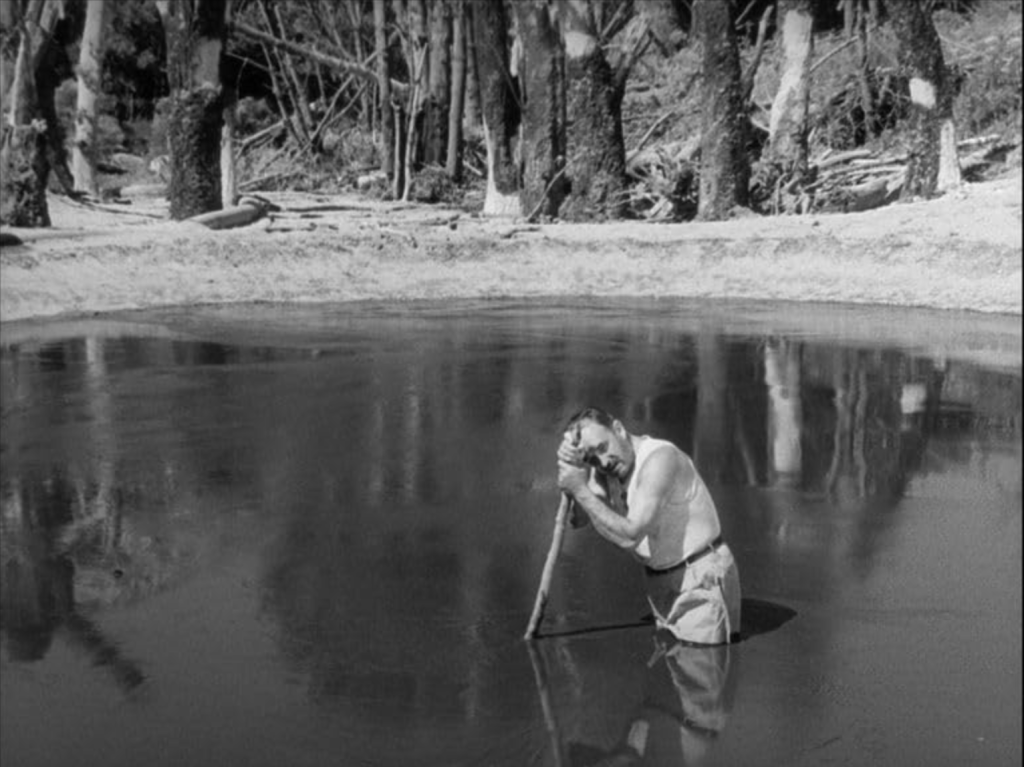
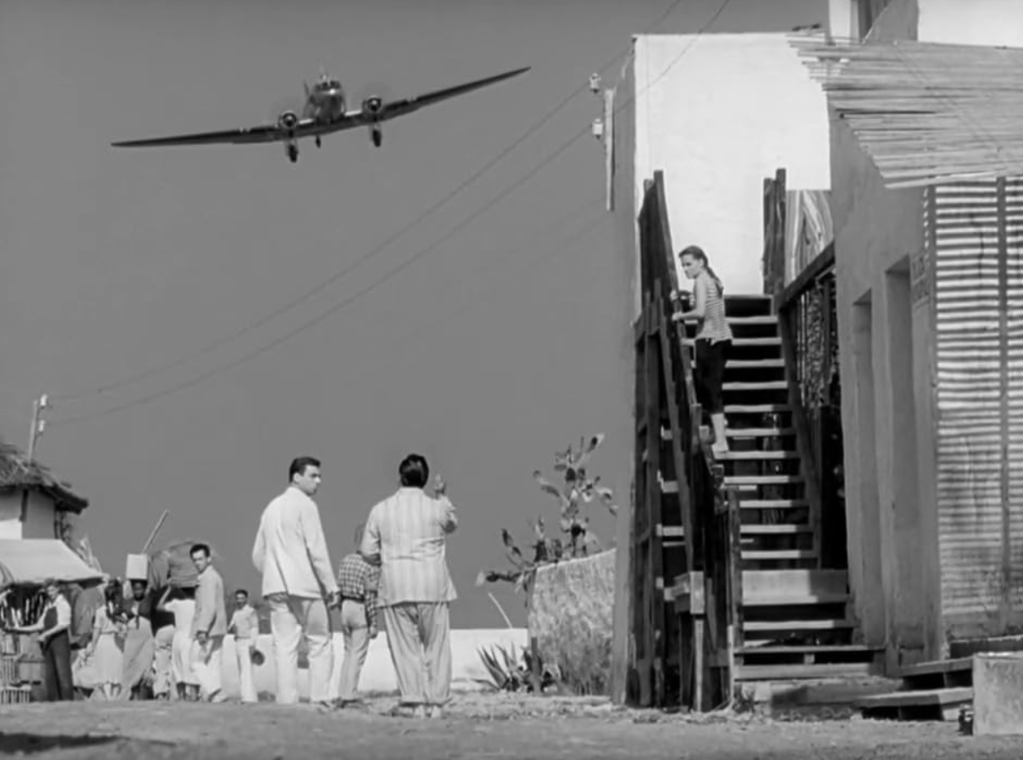
In the novel adaptation Wages of Fear, French, Italians and Germans fight doggedly for their fortunes in a South American village that once lived off the lucrative oil industry of a U.S. corporation. But now this South American village has become a place of dreariness and desolation. The wartime hostility among Europeans seems to have been overcome in this strange, backward world. They look for work in bars and on the streets, hoping to escape the dreariness or at least survive everyday life. These men seem paralyzed, alienated and full of hopelessness.
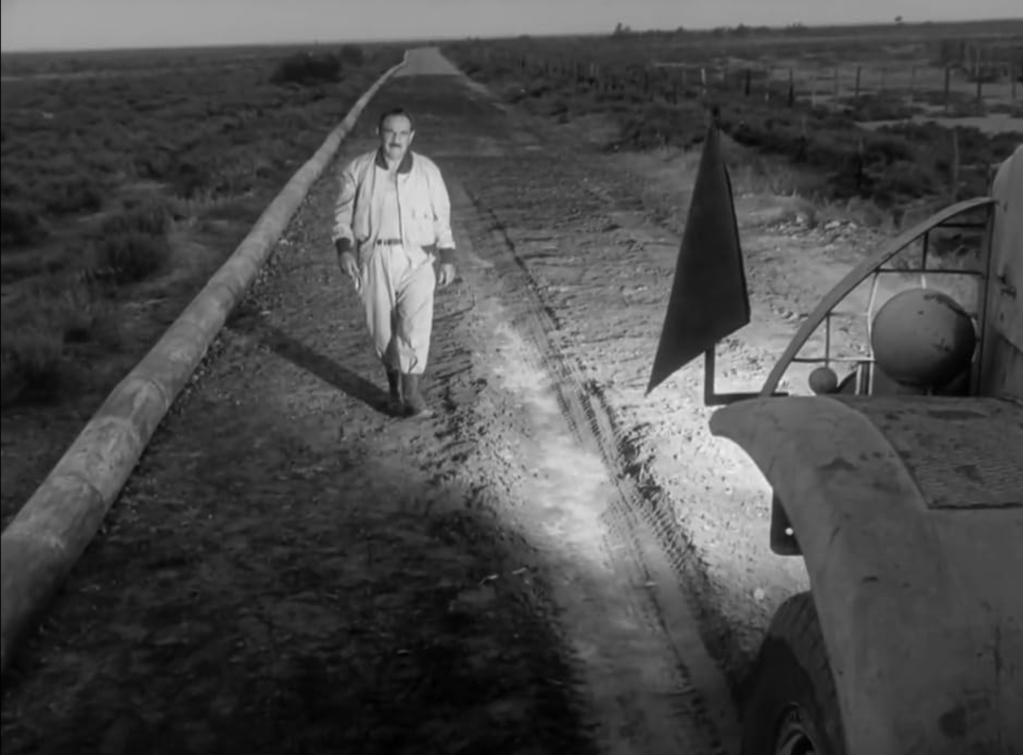
A French compatriot turns this picture. His well-dressed appearance gives him nobility. He is given space in the hyperspace of the decaying social society; for example, he decides whether the music plays or is silent. Everyone obeys, is taken in by the wealth he radiates with his neat white suit. The only thing is that there is no wealth behind it, but equally a life story of social decline. The inverted American way of life.
The main character is also blinded by this impostor. So he even scares away his roommate and friend, with whom he has shared the room for many years. He also neglects his love for this impostor. His engaging, arrogant presence suggests determination and strength of character. Exactly what is missing in this village, in the middle of nowhere.
A catastrophe at one of the oil fields nearby, bursts the lethargy of the inhabitants. For in order to stop the catastrophe and prevent liters of crude oil from continuing to be burned, four men must agree to transport highly sensitive glycerine over hill and dale to blow up the oil-burning gates of hell. To face this task, determination finally returns to their flabby bodies and desolate souls. Led by Mammon, four characters tackle the daring mission of using two rusty trucks to maneuver 1 ton of nitroglycerin over several miles of dirt ground, jungle, and desert. One mistake, and everything explodes.
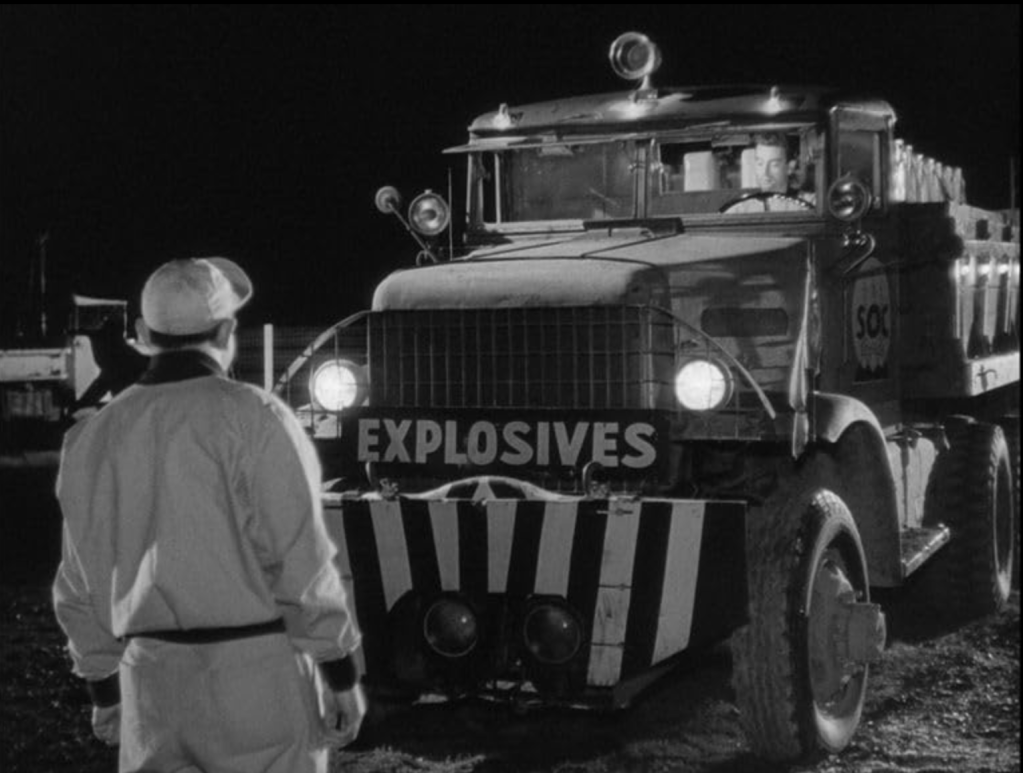
Here it becomes clear: as soon as the cheater has to take off his jacket and put on the uniform of the three other drivers, he obviously leaves his social class. Now he has to admit to himself that he is just as deep in the shit as everyone else; that he is not (anymore) part of an upper class, but of the lower class – if not even the lowest class. He is gripped by fear. It is in this second half, when the highly explosive vehicle is laboriously navigated through the world’s cabinet of dangers, that the film’s greatest strength becomes clear. It is in the delicate transportation that the characters are put to the test: As a result, they overestimate themselves and their abilities; they grow and, unfortunately, break from the seemingly insurmountable tasks. Friendships and enmities are put to the test, although it is clear that the real enemy, the biggest deceiver, is not where the pay envelopes are shared, but where they are spent.
In simpler terms, this is like a war where the rulers use force and fear to control the people, leaving them with only a glimmer of hope to fight for a better life and victory in the end. It’s a system of power and control, like a master and servant relationship.
In the movie Wages of Fear, the main person in power is the oil company owner. He is at fault for the disaster because he ignored safety regulations in his pursuit of more oil. He also sends four men on a dangerous mission for his own financial gain, not caring about the psychological and physical toll it will take on them. The men feel controlled by him and agree to the mission in hopes of escaping their difficult lives in the village.
The much too rushed ending of the film, with a completely alienating comic ending, unfortunately did not make me happy. The first narrative-less half was also tedious at times. But in the existentialist striving of the characters between both segments, one can admire a wonderful psychogram about four people fighting against their fear to realize their dream of a happy life. And for me, the only thing that remains at the end is: the most beautiful jacket wears hope.
Conclusion
The first half a socio-political analysis. The second half a tense psychological thriller.
Facts
Orignal Title
Length
Director
Cast
Le salaire de la peur
150 Min
Henri-Georges Clouzot
Yves Montand as Mario Livi
Charles Vanel as M. Jo
Peter van Eyck as Bimba
Folco Lulli as Luigi
Véra Clouzot as Linda
William Tubbs as Bill O’Brien
Darío Moreno as Pepito Hernandez
What is Stranger’s Gaze?
The Stranger’s Gaze is a literary fever dream that is sensualized through various media — primarily cinema, which I hold in high esteem. Based on the distinctions between male and female gaze, the focus is shifted through a crack in a destroyed lens, in the hope of obtaining an unaccustomed, a strange gaze.
 The Stranger's Gaze